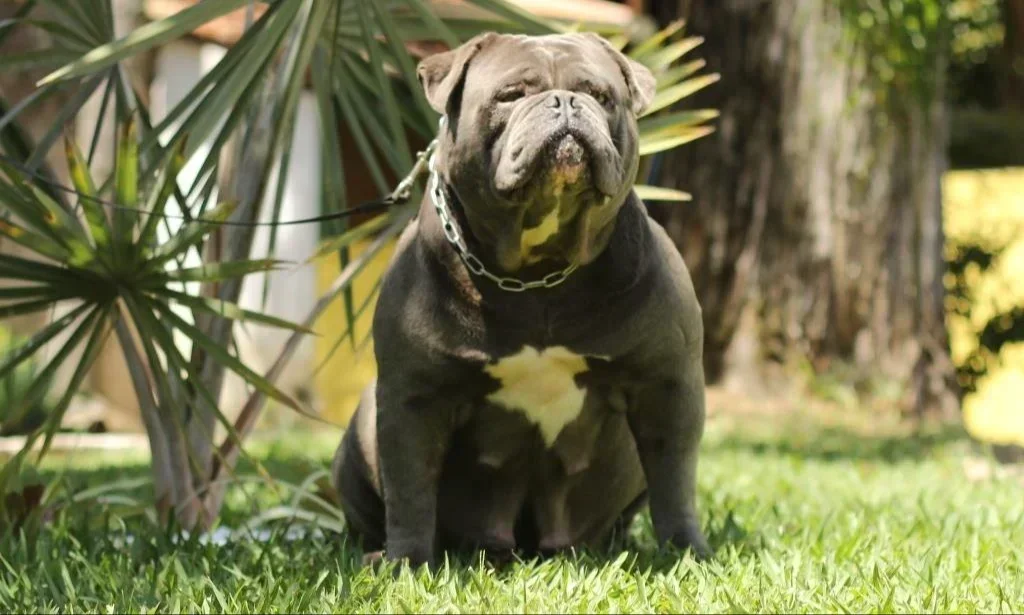
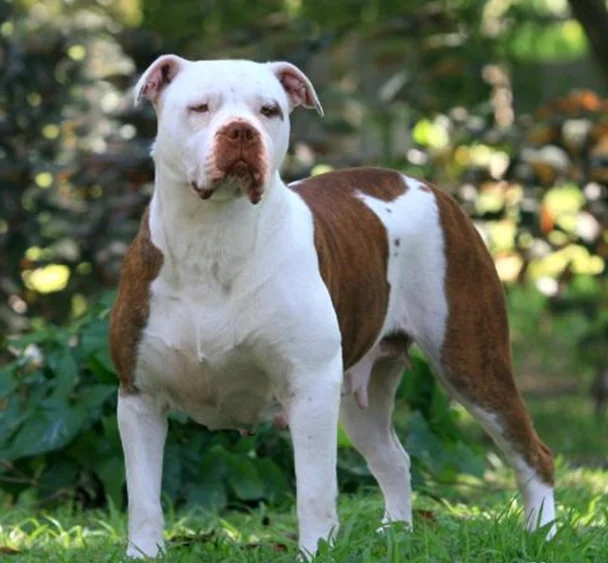
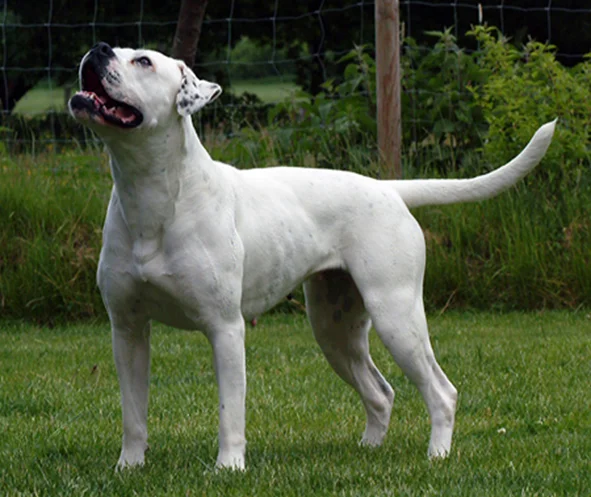
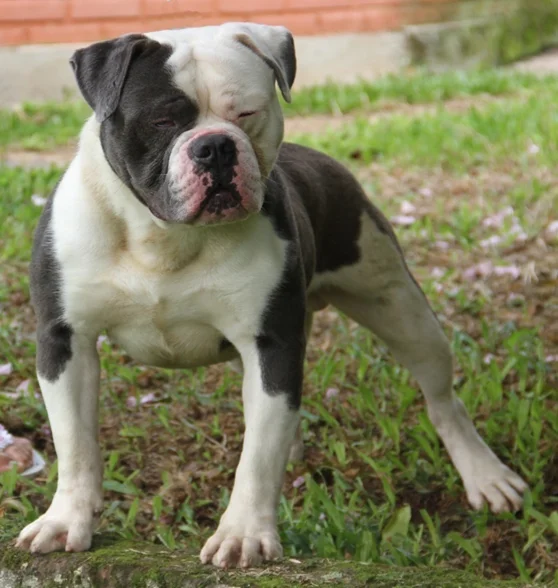
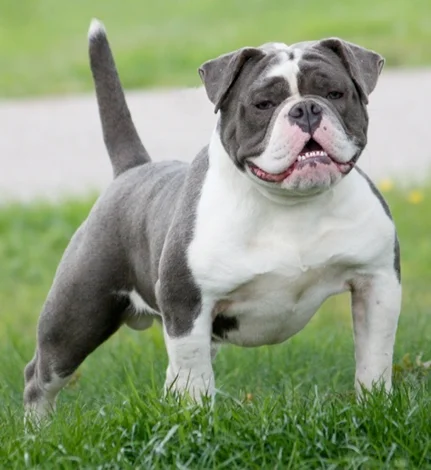
Increasing the frequency of the diluting allele in the American Bulldog breed through backcrossing with the Olde English Bulldogge, Teresopolis, RJ
Dec 26, 2012
| By Beatriz Taques
Final undergraduate thesis presented to Centro Universitário Serra dos Órgãos for the degree in Veterinary Medicine.
Advisor: Roberta Rollemberg Cabral Martins
Teresópolis/ RJ
November 2012
Final undergraduate thesis approved as a partial requirement for the Bachelor's degree in Veterinary Medicine at Fundação Educacional Serra dos Órgãos by the examining board:
We certify that the final undergraduate thesis entitled “Increasing the frequency of the diluting allele in the American Bulldog breed through backcrossing with the Olde English Bulldogge, Teresópolis, RJ”, filed under no. 369, submitted by Beatriz Taques Martins, a student in the Bachelor's program in Veterinary Medicine, under the supervision of Prof. Roberta Rollemberg Cabral Martins, was approved by the UNIFESO Animal Use Ethics Committee at a regular meeting held on 11/08/2012.
Teresópolis, November 8, 2012
CENTRO UNIVERSITÁRIO SERRA DOS ÓRGÃOS - UNIFESO
HEALTH SCIENCES CENTER
BACHELOR'S PROGRAM IN VETERINARY MEDICINE
SUMMARY
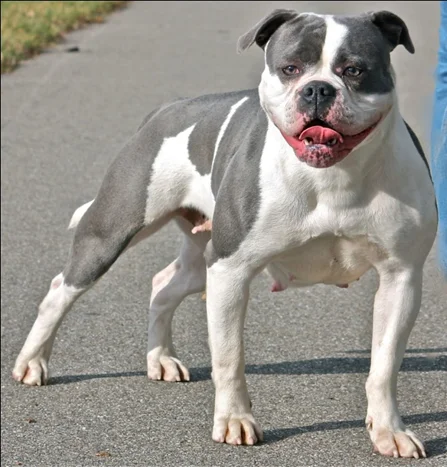
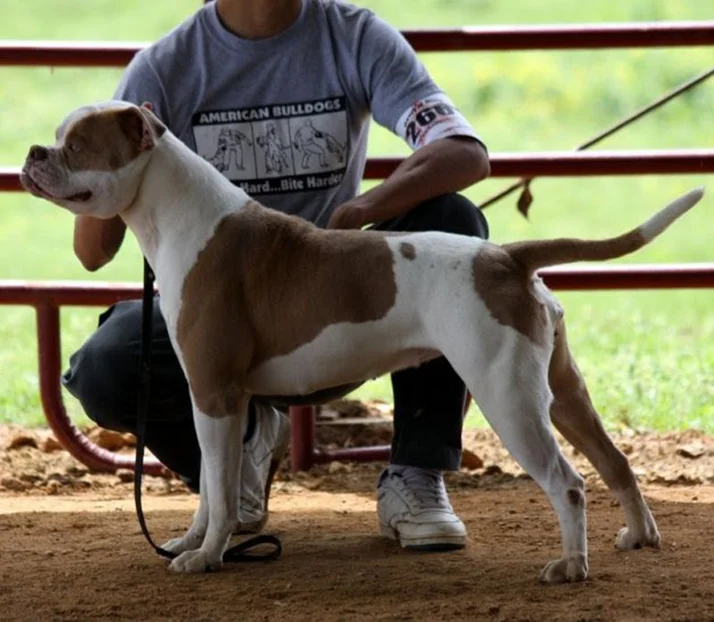
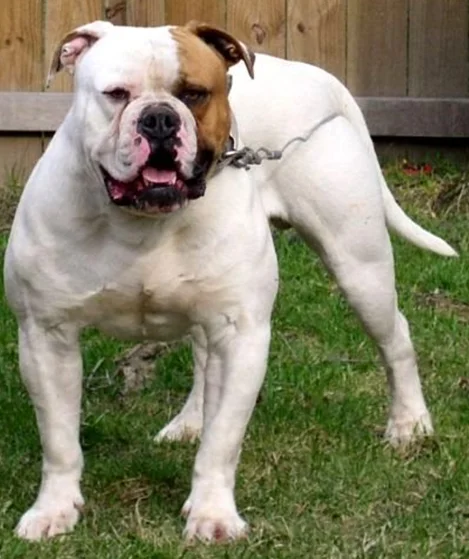
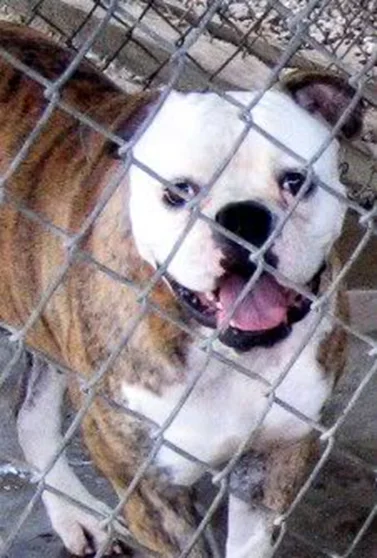
American Bulldogs are currently used mainly as residential guard dogs and companions; as a result, the breed has become more popular and has been gaining ground in the dog show world, making buyers more and more demanding and leading them to look for dogs that are more attractive, healthier and with a stable temperament. Although brindle is still the predominant color, this coat is generally the least sought after by the public and therefore usually has a lower market value. Dogs with diluted colors, such as Blue and “Fawn”, are very rare in the American Bulldog breed; however, this color pattern has become highly valued. Several breeders are currently fixing the diluting allele in various breeds, such as the American Bully, French Bulldog, Olde English Bulldogge, American Staffordshire Terrier, Staffordshire Bull Terrier and Bulldog Campeiro. The aim of this study was to increase the frequency of the diluting allele in the American Bulldog breed through backcrossing with the Olde English Bulldogge, at Sunshine Land Kennel. In the second week of February 2012, a blue Olde English Bulldogge was mated with a chocolate American Bulldog dam. Of the 10 puppies born, 8 showed a diluted phenotype: 4 Blue and 4 Isabella.
Keywords: American Bulldog. Diluting gene. Backcrossing.
ABSTRACT
The American Bulldog breed are used nowadays mainly as guard and companion dogs, so the breed has become more popular and taking more space in dog show world, making buyers to get more exigent and to look for dogs esthetically more attractive, healthier and with a stable temperament. Despite the brindle color is still predominant, this coat is usually less wanted by buyers, and for this reason has a lower value. Diluted colors like Blue and Fawn are very rare in the American Bulldog breed, however this standard has been very valued. There are several breeders who are setting the diluting allele in several breeds, like American Bully, French Bulldog, Olde English Bulldogge, American Staffordshire Terrier, Staffordshire Bull Terrier and Bulldog Campeiro (Brazilian breed). This study aimed to increase the diluting allele frequency in the American Bulldog breed through the backcross with the Olde English Bulldogge, at Sunshine Land Kennel. In the second week of february 2012 a blue coat Olde English Bulldogge was bred to a chocolate coat American Bulldog female. From 10 pups that were born, 8 presented diluted phenotype, being 4 Blue and 4 Isabellas.
Keywords: American Bulldog, Diluting gene, Backcrossing
1 INTRODUCTION
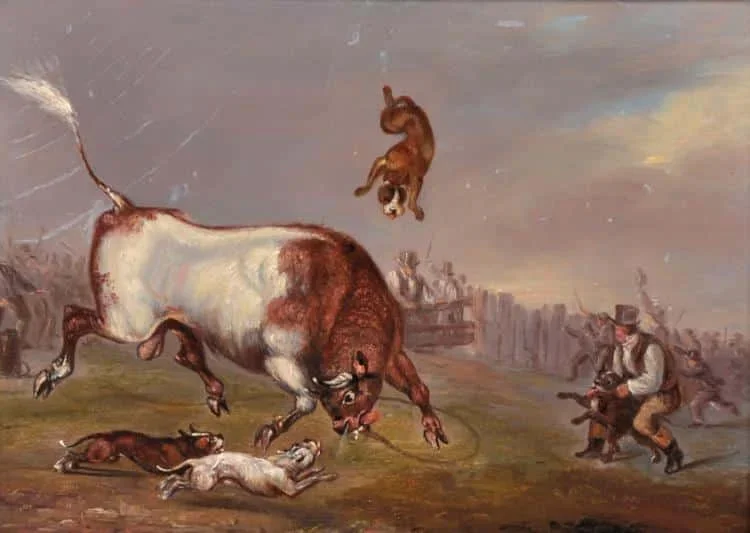
The Bulldog was first developed by the English, who bred these dogs for arena fights against bulls, bears and various wild animals. Later, English immigrants took the dogs to North America, where they were used to help with livestock, for protection against wild animals and to guard farms.
In the 1970s, John D. Johnson and Alan Scott, breeders and students of the breed, began to catalog and register these dogs and gave them the name “American Bulldog”, known in Brazil as “Buldogue Americano” or “Bulldog Americano”.
The breed was formed mainly from dogs with white, black brindle and fawn coats, a few chocolate dogs and very rare blue dogs (dogs with the color-diluting allele, dd).
Over the years, dogs with chocolate coats and mucous membranes became the preference of a large number of breeders and fans of the breed. As a result, intense genetic selection was carried out to increase the incidence of this color in the breed, so that it came to represent a large share of today's American Bulldogs.
As for the blue color, the diluted phenotype of black, as early as 1994 there was a report of a female bred by Mr. John D. Johnson, named “Johnson's Savannah”, with a brindle coat carrying the diluting gene, known as “blue brindle”. However, blue dogs are still very rare.
Today in Brazil, the breed is sold mainly as a residential guard dog and companion, with a small percentage of dogs working on farms. The breed has become more popular and has been gaining ground in the dog show world; as a result, buyers are becoming more and more demanding and are looking for dogs that are more attractive, healthier and with a stable temperament.
Black brindle dogs are generally the least sought after by the public and therefore usually have a lower market value. Several breeders are currently fixing the diluting allele in various breeds, making these animals highly valued for their exotic (blue) color. Today there is a large increase in the frequency of the diluting allele (dd), mainly in the American Bully, French Bulldog, Olde English Bulldogge, American Staffordshire Terrier, Staffordshire Bull Terrier and Bulldog Campeiro breeds, which are in high demand among buyers around the world. In some breeds, dogs of this color are being sold for very high prices, reaching almost three times the price of dogs with non-diluted colors.
The aim of this study was to increase the frequency of the diluting allele in the American Bulldog breed through backcrossing with the Olde English Bulldogge, at Sunshine Land Kennel, without losing focus on the breed standard, and thereby to add value.
2 LITERATURE REVIEW
2.1 THE HISTORY OF THE AMERICAN BULLDOG
The history of the American Bulldog begins in the mountains of Tibet, where the Molossian or mastiff-type dogs arose. They descend from the great Tibetan wolf, which still exists in northern India and Tibet. The Chinese were probably the first people to breed true mastiffs; their literature contains references to large hunting dogs with short muzzles and broad jaws, around 1121 BC. These dogs were used to hunt dangerous animals such as tigers, wild boar or bears. The hallmark of these canine monsters was always their size, their relative slowness (compared with Greyhounds and the larger Terriers) and their exceptional ability to defend themselves (PUTNAM, 1999).
Stone carvings showed a muscular, short-haired, solid dog, without the excess skin of today's Molossian breeds. Compared with today's English Mastiff, the ancestral molosser was less than half the size, with a build similar to that of a heavy-boned American Pit Bull Terrier. There is no doubt that these dogs were also sturdy, with well-placed legs and without the dysplasia of today's show mastiffs (PUTNAM, 1999).
Alexander the Great brought more mastiffs from India to Greece around 333 BC, and Greece was the center of mastiff breeding for 700 years, until the English dogs became predominant. In appearance, and perhaps in temperament, the dog closest to the Greek mastiff would be the Swinford Bandog, a combination of the athletic Neapolitan Mastiff, English Mastiff and Pit Bull. Swinfords have large (not huge), muscular bodies, with solid, medium-sized heads similar to a Pit Bull's (PUTNAM, 1999).
Julius Caesar may have encountered English mastiffs when he made his first raid on England in 55 BC. Legend says he was so impressed by the ferocity of the muscular war dogs used by the Celtic tribes that he brought some back with him (PUTNAM, 1999).
Supposedly, the Celts bred the dogs and trained them to bite the muzzles of cavalry horses. The ancient Bulldogs would hold on to the horses' muzzles until the horses began to buck and throw their riders. Modern American Bulldogs and American Pit Bull Terriers capable of immobilizing a horse in this way weigh between 45 and 100 pounds (1 pound is about 0.4536 kilograms). The ancestral British dogs were probably about the same size, and by the standards of the time these dogs were huge. Today they are known by their Latin name “Pugnaces”, and because of the way they attacked, it can be said with confidence that the Pugnaces were true Bulldogs, perhaps the first in the world (PUTNAM, 1999).
The Pugnaces were fawn with a black mask or dark brindle, colors similar to today's Bullmastiff, but the Pugnaces were much leaner. If we could go back in a time machine, people would mistake them for a large Pit Bull or a small Bandog (PUTNAM, 1999).
Some Celtic tribes also bred their Pugnaces to hunt wild boar, which was considered a magical animal in ancient Britain. They were used together with scent hounds, since they were catch dogs and not scent dogs. The hounds would have relied on the Pugnaces' protection against boars or bears. Hunting was a mystical and religious experience for the Celts (PUTNAM, 1999).
Around 300 AD, the Romans recognized the superiority of British dogs for use in battle. The emperor appointed a special official called the “procurator cynegii”, who worked out of Winchester. His job was to find the sturdiest, most aggressive fighting dogs in Britain and send them to Rome.
They shipped two types of mastiffs: 1- a lighter dog (well under 100 pounds) for combat in the Colosseum against bulls, wolves and small cats; 2- a heavier dog (around 100 pounds) to fight wolves, big cats and exotic challengers such as hyenas (PUTNAM, 1999).
There is evidence that the Romans actually used the name Bulldogs for the lighter dogs, as well as accounts that they were able to break the neck of a bull and were transported in iron cages. The Romans loved these dogs so much that they gave up importing fighting dogs from Greece, which had been their main source for centuries. This must have been a blow to Greek dog breeders, because the name “Molossus” comes from a region of northern Greece called Molossia, whose name comes from a tribe called the Molossi (PUTNAM, 1999).
Even today there are two types of mastiff in Italy that descend from the first English Pugnaces: the Neapolitan, at 90 to 150 pounds, and the Cane Corso, under 100 pounds. The Cane Corso is still used by Italian farmers as a working Bulldog and probably shares ancestors with the English Bulldog, American Bulldog and Pit Bull (PUTNAM, 1999).
Several centuries later, a new type of mastiff reached the British coast, brought to Europe by nomads called the Alani, who had been driven out of Asia by the Huns. The Alani roamed Europe and finally settled in what is now Albania, a region not far from Molossia. Their dogs became known as Alants or Alaunts in medieval England. The Alants were described as white (sometimes with dark patches around the eyes), with a large head and a short muzzle, and they were excellent for hunting wild boar. This was the second type of Bulldog to be bred in Britain. The modern American Bulldog fits the description above perfectly. The Alant may be the most direct ancestor of the American Bulldog, Pit Bull, Sour Mug, Spanish Bulldog and Dogo Argentino (PUTNAM, 1999).
There are direct descendants of the Alants alive today that are less well known. In the mountainous regions between Turkey and India there are large white mastiffs that are still used in fights against bears (PUTNAM, 1999).
English dogs were subjected to much greater performance pressure than their European cousins. Breeding selection was not done directly by people through conformation judging, as it is today with show dogs, but by selecting those that performed best in fights with other animals, and this selection lasted more than 1,450 years. Over this vast period of time, a dog of unbelievable courage emerged: the Olde English Bulldogge. There were accounts that these dogs could hold on to a bull's lips even after their entrails had been torn out. Butchers sometimes subjected their Bulldogs to unimaginable cruelty to prove their fighting ability, even cutting off their legs while the dog held on to its opponent, until all its blood had drained. A great Bulldog would hold its grip even when mutilated (PUTNAM, 1999).
Performance Bulldogs and Pit Bulls are among the bravest animals that have ever lived on Earth. There are accounts that these dogs are braver than lions, since a lion does not normally attack an adult elephant, whereas a fighting Bulldog would attack if ordered to; it might not survive, but it would die trying (PUTNAM, 1999).
In the Elizabethan era, some Bulldog lines became more specialized for fighting, being smaller and more agile (PUTNAM, 1999).
When bull-baiting became more popular, Greyhounds and Terriers were probably added to Bulldogs to increase speed and reduce size (PUTNAM, 1999).
One sign of the superiority of the Olde English Bulldogge was its export to every part of Europe, even though those countries already had their own lines. Charles V of Spain imported 400 dogs from England to prepare for war against France in 1518. These dogs destroyed the French war dogs and became famous throughout Europe (PUTNAM, 1999).
In 1588, Olde English Bulldogges were exported not only to Spain but also to Cuba and Florida, where they were used in violent sports. They were the first Bulldogs in America, and possibly an ancestor of today's American Bulldog (PUTNAM, 1999).
There are two reasons for the variety of types found in Bulldogs: 1- the dogs were used not only for bull-baiting but also for bear-baiting, activities that required different sizes and builds; 2- uniformity of appearance is a modern phenomenon found in show dogs; 150 years ago, before dog shows, all breeds showed great variety, since dogs were bred for performance and no one cared about looks (PUTNAM, 1999).
Within the Olde English Bulldogge breed, this variety was more pronounced in the 16th and 17th centuries, because bear-baiting was at its peak in England, which required larger, sturdier dogs, different from those that fought bulls. So the two lines grew apart during this period. In 1609 an English playwright mentioned “BullDogs” and “BearDogs” as if they were separate breeds. The larger ones, called “BearDogs”, were also called “BanDogges” in the 17th century. BanDogges were described as huge, ugly and fearsome. Besides bear-baiting and guard work, they were used in fights against lions as the English appetite for blood sports grew. They were sometimes put in arenas against a man armed with a spear, no doubt a good test of the breed's guarding ability (PUTNAM, 1999).
In the 17th century, with the English colonization of America, the history of Bulldogs and Bandoggs continued in the New World (PUTNAM, 1999).
In 1835, fights between dogs and other animals were banned in England, and these lines declined rapidly. As a result, dog fighting replaced fights against other animals, and it was only banned at the turn of the 19th century (PUTNAM, 1999).
In dog fighting, Terrier blood was supposedly needed to eliminate the Bulldog's tendency to grab and hold, which made dog fights boring; the smaller size increased the dogs' stamina and made fights last longer.
Bulldogs were crossed with Terriers to make Pit Bulls or with Pugs to make “Sour Mugs”, and as a result they were becoming extinct in their country of origin. Many were exported to America to make Boxers, American Bulldogs and Pit Bulls (PUTNAM, 1999).
In an attempt to save this symbol of English courage, the first dog show for Bulldogs was held in 1860. The standard used was a slightly exaggerated form of the original working dog; these dogs were supposed to have long legs and look like short-muzzled American Bulldogs or medium-muzzled Boxers (CONFEDERAÇÃO BRASILEIRA DE CINOFILIA, 2005).
The difference between modern standards and the lines of that time is that breeders took breeding so seriously that the dogs were functional first, with concern for show conformation coming second (PUTNAM, 1999).
In 1870 the intermediate “Sour Mug” types began winning shows, dogs that clearly did not have the build of functional dogs. Since then, most show Bulldog lines have become more and more exaggerated and less healthy, while a minority of breeders kept producing functional Bulldogs. As a result, there was strong pressure for the standard to allow an “extreme” appearance. A fierce debate took place at the end of the 19th century about changing the standard, just as happens in Bulldog communities today. Today in America, a few breeders want only enough breed type to tell American Bulldogs apart from American Pit Bull Terriers, while most want really big, extreme dogs, truly like giant English Bulldogs (PUTNAM, 1999).
At the end of the 19th century, breeders of functional Bulldogs in England challenged “Sour Mug” breeders to long-distance walking trials. The question was not whether the extreme “Sour Mugs” could beat the less extreme ones, but that they would not even be able to finish a 10-mile course. The first challenge ended with the “extreme” Bulldog collapsing after two miles. These demonstrations of uselessness changed nothing, since inbreeding of deformed dogs kept increasing. The image of the functional dog was less and less associated with English show dogs (PUTNAM, 1999).
In 1898 the majority of breeders, who bred show dogs, won the debate, and the English standard deliberately eliminated the depiction of the functional Bulldog and made other changes that allowed show breeders to quickly turn the “warriors” of old into the caricature of today's English Bulldogs. And to transform their dogs even faster, the Pug was extensively reintroduced for about another half century. The introduction of the Pug was blamed for the loss of functionality of the old English Bulldogs (Olde English Bulldogges) (PUTNAM, 1999).
In the 17th and 18th centuries, English settlers brought their performance Bulldogs and BearDogs to America for three reasons: to control livestock, to hunt wild animals and for personal protection. These settlers did not have the vanity to use their dogs in fights against bears and bulls for entertainment, as their cousins in the Old World did. So they bred their Bulldogs to be less violent and easier to train (PUTNAM, 1999; AMERICAN BULLDOG KENNEL CLUB, 2012).
These dogs became known by many different names, depending on regional varieties. Most of the names were combinations or variations of four words, “Old”, “English”, “White” and “Bulldog”, such as Old English White, White English Bulldog, Old English or simply (and most commonly) Bulldog (PUTNAM, 1999).
Dogs from some lines were neither white nor predominantly white. These dogs were called “Brindle Bulldogs”. In the southern United States, the Black community kept the “Brindle Bulldogs”, and there is still a Black breeder in Ohio today who keeps this tradition alive and still breeds brindle and fawn Bulldogs. Out of prejudice, white farmers thought white Bulldogs were more intelligent than the colored version. There are three valid reasons for breeding white Bulldogs: 1- white is a highly recessive color and would be a safeguard against crossbreeding; 2- the white color was more visible when hunting wild boar, especially at night; 3- by breeding white dogs they were returning to the breeding of the Alants. On the other hand, there are many health problems associated with white dogs, and it is a poor color for a guard dog (PUTNAM, 1999).
John D. Johnson named the breed “American Bulldog”. During Mr. Johnson's childhood and teenage years, in the 1920s and 1930s, these dogs were known as Pit Bulldogs in northern Georgia, because they were sometimes used to fight dogs and large wild animals in pits. He was the first person to sell them to the general public in the 1950s, so the name he used, “American Pit Bulldog”, was the first name to become widely used outside the rural American South. In 1985 Johnson realized that people were confusing this breed with the American Pit Bull Terrier, so he changed the breed's name to American Bulldog. Mr. Johnson's friend Joe Painter also contributed to the name change (PUTNAM, 1999; CONFEDERAÇÃO BRASILEIRA DE CINOFILIA, 2005).
In the early 1970s, several breeders set out to rebuild and rescue the breed, names that are found in today's pedigrees, such as Scott, Williamson, Bailey, Tate and Johnson. They were responsible for preserving the Old English Bulldog and keeping the breed alive to this day (PUTNAM, 1999).
Three main American Bulldog lines came into being: Johnson, Scott and Painter (PUTNAM, 1999; AMERICAN BULLDOG KENNEL CLUB, 2012).
1- The Johnson line is characterized by heavy bone and a large body, large square heads, generally a short muzzle, a definite undershot bite, facial wrinkles, elbows turned slightly outward and a very broad chest. This type carries “Sour Mug” blood, which makes it look more distant from the American Pit Bull, and it is known for having more “breed type” (PUTNAM, 1999; AMERICAN BULLDOG KENNEL CLUB, 2012).
2- The Scott line is a little lighter in type than the Johnson type, with a longer muzzle; they have a slight undershot bite or may have none at all.
3- The Painter line has longer legs and occasionally a shorter muzzle than the Scott type, but with a similar structure. Most Painters were developed as fighting dogs and may have a more aggressive temperament than other dogs from performance lines (PUTNAM, 1999; AMERICAN BULLDOG KENNEL CLUB, 2012).
The founders of the breed, Scott and Johnson, bought dogs from each other and crossed dogs from their lines. Painter bought dogs from both Johnson and Scott. Johnson started breeding in the 1930s, Scott in the 1960s and Painter in the 1970s. Only Johnson and Scott kept breeding the breed, and these two lines later became the basis for the breed standard (PUTNAM, 1999).
In the early 1980s there was a conflict between Scott and Johnson, who became less friendly after the NKC (National Kennel Club) began holding shows for the breed in the United States, where one type began to beat the other (PUTNAM, 1999).
After much discussion in the breeder community, two different standards were created for the breed: the line of lighter, performance dogs had its type recognized as “Standard”, and the heavier dogs were recognized as the “Bully” type (PUTNAM, 1999).
2.1.1 American Bulldog breed standard
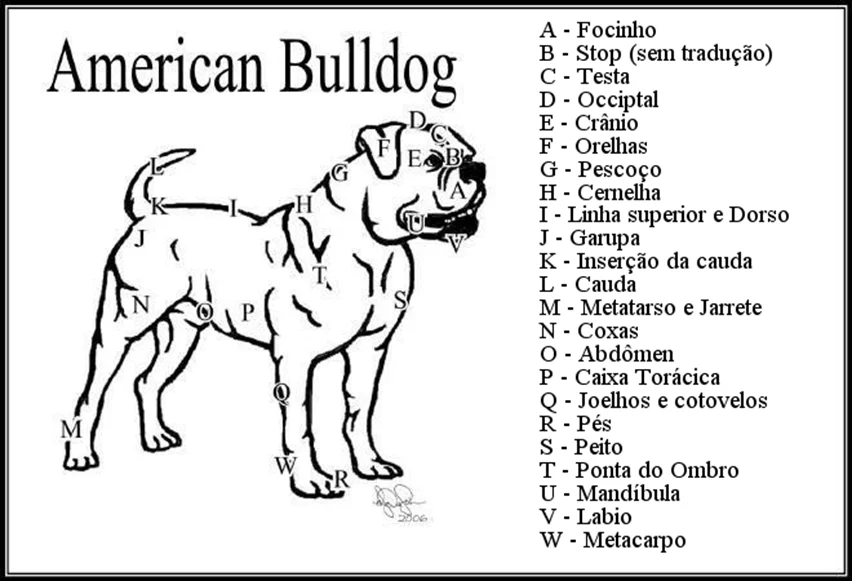
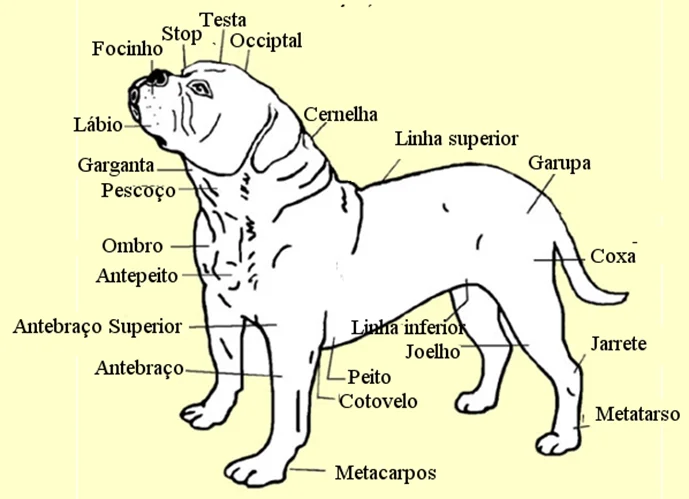
According to the Confederação Brasileira de Cinofilia (2005), the American Bulldog originated in the United States of America, is used as a guard dog and should have the following characteristics (Figure 1):
Figure 1: Morphology of an American Bulldog
Source: Translated from Backwood's Bulldog Club, 2012.
· General appearance: a powerful dog, showing strength, endurance, intelligence and liveliness. Powerfully built, yet active.
Characteristics: the essential characteristics of the American Bulldog are those that make it able to catch both cattle and wild hogs, and to serve as a personal and property guardian. These tasks require a powerful, agile and dependable dog, with a large head and powerful jaws. The American Bulldog is brave enough to face a fearsome bull or an intruder, aggressive enough to fight a bear or a wild hog, yet gentle enough to be a companion dog and loving with the family.
Temperament: very obedient and loyal to its family. Very friendly during the day, but very aggressive at night, especially with strangers. It should be eager, brave and confident, with no sign of fear or shyness.
Size/ Weight:
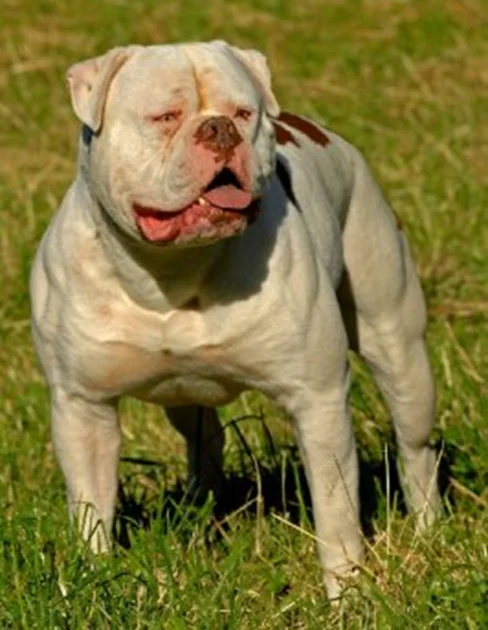
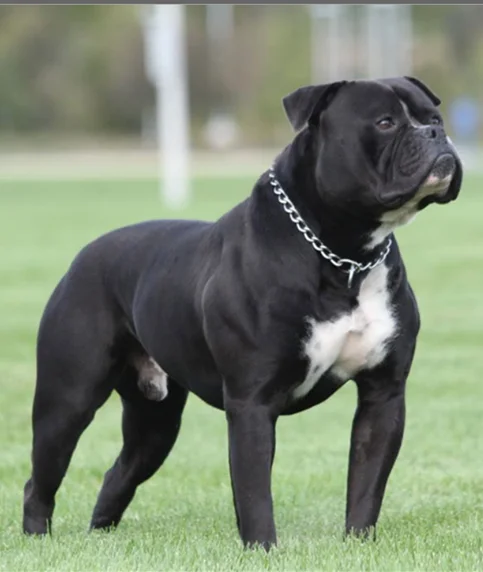
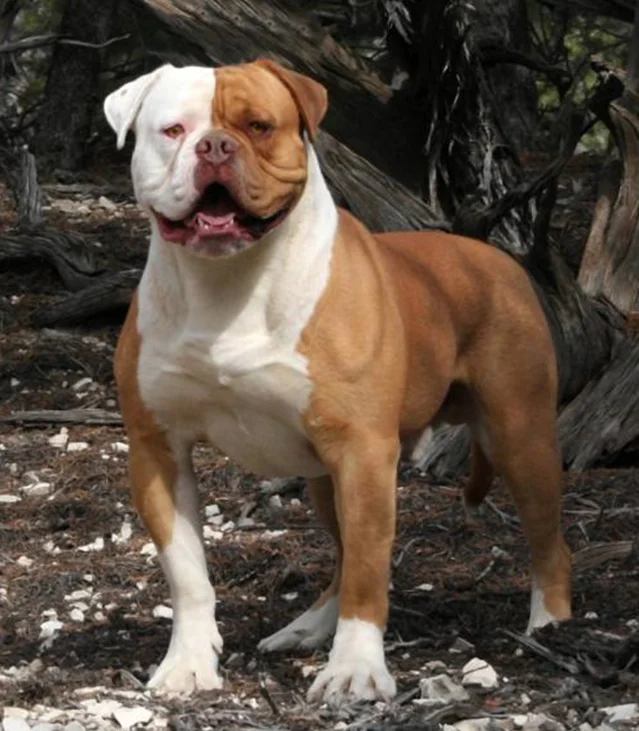
ü Bully: Males 23 to 32 inches at the withers. Weight: 90 - 150 lbs. Females 20 to 28 inches at the withers (Figure 2). Weight: 70 - 130 lbs;
Figure 2: Bully-type American Bulldog
Source: Pedigree Database, 2012.
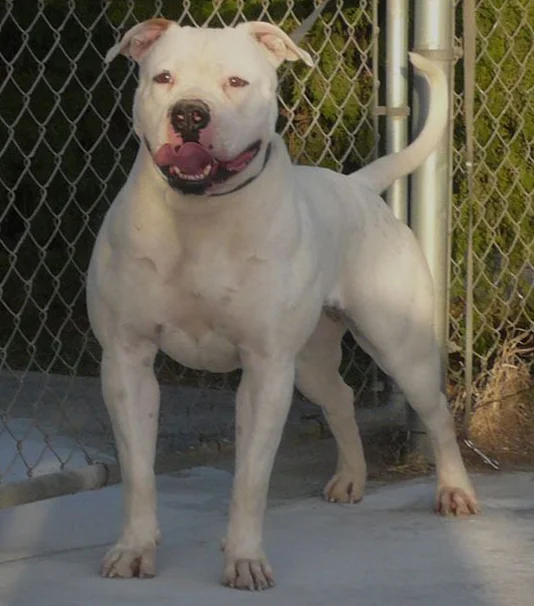
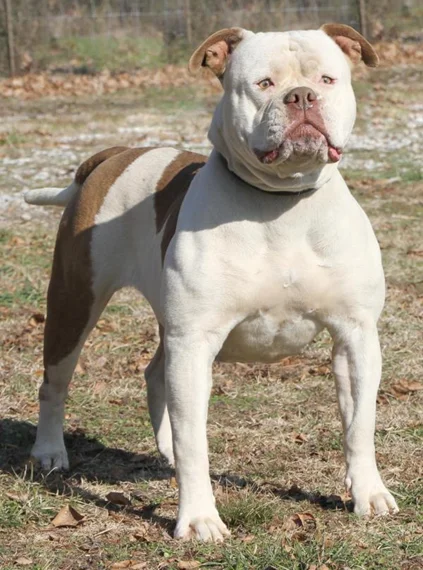
ü Standard: Males 22 to 28 inches at the withers. Weight: 70 - 100 lbs. Females 18 to 26 inches at the withers (Figure 3). Weight: 50 - 80 lbs;
Figure 3: Standard-type American Bulldog
Source: Bybees, 2012.
· Head: Large and broad, flat on top, giving a square appearance, with a short to medium-length, well-muscled muzzle. Where the muzzle meets the skull, it forms a well-defined stop;
ü Skull: large, flat, deep and broad between the ears. Viewed from above, the skull is square. The cheek muscles are prominent.
ü Muzzle: should be broad and deep, neither long nor narrow. The length should be no less than 3.8 cm and no more than 7.5 cm (ideal length: 5 to 6.8 cm);
ü Nose: large, with wide, open nostrils. It may be any color, but dark pigmentation is preferred;
ü Jaws: the lower jaw should protrude slightly beyond the upper jaw, by at least 0.6 cm to 2.5 cm (undershot bite), depending on the size of the dog and the shape of the head. Fault: overshot bite.
· Eyes: set apart, almond to round in shape, medium-sized. Normal color, brown. Acceptable colors: gray, green or light blue.
· Ears: small to medium in size, carried close to the head, hanging or folded back in a rose.
· Neck: slightly arched, of moderate length. Very muscular, almost equal to the length of the head.
· Body:
ü Chest: deep and moderately wide, with ample room for the heart and lungs;
ü Ribs: well sprung from the spine, giving the body enough depth to reach at least the elbows or, in adult dogs, a little lower;
ü Topline: slopes gently from well-marked withers to a broad, muscular back;
ü Loin: short and broad, and slightly arched, joining a moderately sloping croup;
ü Flank: moderately tucked up and firm;
ü Faults: swayed back; sloping topline;
· Tail: strong and thick at the root, tapering toward the tip. Fault: tail curled over the back.
· Coat: short and soft. Fault: long or wavy.
· Feet: round, medium-sized, well arched and tight.
· Color: solid white. White with all shades of brindle (white, red, yellow, blue, brown, black or gray). Red and white; brown and white; beige and white; fawn and white; black and white; chocolate and white; mahogany and white; cream and white. Solid black and any other color without at least 25% white are not acceptable.
· Forequarters: the main components of the forequarters, from the shoulders to the feet, should be muscular and slightly sloping. The legs should be straight.
· Bone structure: medium to heavy, able to support a large dog.
· Hindquarters: broad and muscular, showing strength and speed, not as strong as the shoulders.
· Movement: at the trot, movement is effortless, smooth, powerful and well coordinated, showing good reach and drive. The topline stays level, with only a slight flex to indicate agility. Viewed from any position, the legs turn neither out nor in; the feet do not cross or interfere with each other. As speed increases, the feet tend to converge toward the center line of balance. Poor movement should be penalized to the extent that it impairs the dog's ability to perform its tasks.
· Disqualification:
ü Very full black mask;
ü Cow hocks;
ü Scissor or level bite;
ü Splayed feet;
ü Wall eyes;
ü Docked tail.
· Faults: any departure from the terms of this standard should be considered a fault and penalized in exact proportion to its severity.
· Notes:
ü Males should have two apparently normal testicles descended into the scrotum.
ü Any dog showing any sign of physical or behavioral abnormality should be disqualified.
2.2 THE HISTORY OF THE “OLDE ENGLISH BULLDOGGE”
The Olde English Bulldogge originated in England between 1600 and 1700. These dogs were the first ancestors of many of the bull-type dog breeds that exist today, including the English Bulldog and the American Bulldog (INTERNATIONAL OLDE ENGLISH BULLDOGGE ASSOCIATION, 2012).
These dogs were bred to take part in blood sports such as bull-baiting, which were very popular in England and called for dogs of great courage and agility (INTERNATIONAL OLDE ENGLISH BULLDOGGE ASSOCIATION, 2012).
Around 1835, laws were passed in England banning bull-baiting, so the main purpose of the Olde English Bulldogge's existence disappeared from its home country, and within a decade the number of Bulldogs dropped drastically, nearly to extinction (INTERNATIONAL OLDE ENGLISH BULLDOGGE ASSOCIATION, 2012).
Show dog breeders eventually decided to rebuild the breed, but they wanted to tone down the aggressive temperament of the original Olde English Bulldogge. To do so, they crossed the remaining dogs with other breeds, and over the years that followed they developed the modern English Bulldog. Unfortunately, this modern dog is plagued by almost every kind of genetic health problem (INTERNATIONAL OLDE ENGLISH BULLDOGGE ASSOCIATION, 2012).
The modern Olde English Bulldogge (OEB) is a reconstruction of the original Old Bulldog of the 17th and 18th centuries. Various genetic crosses, carefully thought out and planned in breeding programs, have been used to reach this goal.
The foundation of most of today's OEBs can be traced to the English Bulldog, American Bulldog, American Pit Bull Terrier and Mastiff (INTERNATIONAL OLDE ENGLISH BULLDOGGE ASSOCIATION, 2012).
These different breeds were used very selectively in various combinations to obtain the desired physical characteristics of the original Olde English Bulldogge. The aim is a good Bulldog, with great athletic ability, much healthier physically and without most (or all) of the problems that afflict many modern Bulldogs. The goal of every OEB breeder should be to produce genetically healthy dogs (INTERNATIONAL OLDE ENGLISH BULLDOGGE ASSOCIATION, 2012).
2.2.1 Olde English Bulldogge breed standard
The goal of every Olde English Bulldogge breeder should be to achieve perfection, aiming for the breed's health, type and temperament (INTERNATIONAL OLDE ENGLISH BULLDOGGE ASSOCIATION, 2006).
According to the International Olde English Bulldogge Association (2006), the Olde English Bulldogge should have the following characteristics (Figure 4):
Figure 4: Morphology of an Olde English Bulldogge
Source: Translated from Meester Bulldogs, 2012.
· General Description: The ideal Olde English Bulldogge is a loyal, courageous, medium-sized dog with a large, powerful head and a sturdy, muscular body.
ü It is very important that Olde English Bulldogges be athletic and healthy; both males and females should breed naturally.
ü The OEB (Olde English Bulldogge) should be free of all breathing problems and able to enjoy outdoor activities without concern, except in extreme heat or cold.
· Its temperament is very stable and confident, making it a loyal and protective companion and a member of the family. Dogs of this breed love to please their owners and are very trainable.
· Its average life span is 10 to 14 years.
· Head: Large and imposing, moderately furrowed between the eyes (median furrow). The circumference of the head should be equal to or greater than the dog's height at the shoulder. A narrow head, or one that looks too small for the body, is a fault.
· Ears: rose ears set on the sides of the head are preferred. Drop ears are acceptable, as long as they are small and do not resemble those of a “hound”. Fully erect ears set on top of the head should be considered a serious fault.
· Muzzle: broad, deep and short, with moderate wrinkles. The bite should be undershot. The lower canines should not protrude. A muzzle that is too long (more than 3 inches) or a scissor bite is considered a disqualifying fault. The muzzle should not be shorter than 1 ½ inches. A wry jaw is a disqualifying fault.
· Eyes: set apart and of moderate size. Any color is acceptable. However, odd, mismatched eyes (one dark, one blue, or wall eyes) should be considered non-preferred. Deformed or bulging eyes are considered a serious fault. Lack of pigmentation around the eyes is undesirable. Crossed and asymmetrical eyes are considered a disqualifying fault.
· Nose: broad, with open nostrils, with no sign of restricted airflow. The nose should not be set in between the eyes. The distance from the “stop” to the tip of the muzzle should be at least 1 ½ inches. The nose should be a solid color. Lack of pigment is a serious fault. A nose with no pigmentation is a disqualifying fault.
· Neck: short to medium length and very muscular.
· Chest: ribs well sprung (rounded), chest broad and deep. The depth of the chest should reach at least the elbows. An empty or narrow rib cage should be considered a serious fault.
· Back: Males should look square and balanced. Females should be similar, tending to have a slightly longer body. A short back, sloping slightly from the shoulders to the croup, is preferred (slightly descending). A level back is acceptable, as long as the tail is not set directly on top of the back.
· Shoulders: The shoulders should be well placed and very well angulated, allowing good movement. Straight shoulders are a fault.
· Legs: The legs should be straight and well apart, neither bowed out nor turned in. They should have significant bone mass. The elbows should be relatively close to the body. Lack of bone mass is very undesirable. Loose elbows or a "fiddle front" are a disqualifying fault. Legs turned out (east-west) are considered a serious fault. The hind legs should have good stifle angulation to allow good movement. The legs should be well muscled. Straight, poorly angulated legs are a serious fault. Cow hocks are a disqualifying fault.
· Movement: Dogs should have a balanced gait, with good rear drive complemented by ample reach of the front legs, allowing the dog to cover ground powerfully. Dogs should trot on their own; dogs that have to be coaxed to walk or that are dragged “like a crab” are considered a serious fault.
· Feet: round and tight, both front and rear; the pasterns should be strong. Weak pasterns and/or splayed feet are disqualifying faults.
· Height: Males - 18 to 20 inches at the withers. Females - 17 to 19 inches at the withers.
· Weight: between 50 and 70 pounds for females and 65 to 85 pounds for males. Height and weight above the standard should be discouraged, but there is no penalty as long as the dog is proportionate, correct and balanced.
· Color: Any color is acceptable except merle, with no preference for any color. The coat is short. A wavy or long coat is a disqualifying fault. There should be no sign of feathering on the legs or neck area, which is also considered a disqualifying fault.
· Tail: A long tail reaching the hock is preferred; it should not form a hook and may resemble the handle of an old water pump. Short, curled or docked tails are acceptable. A long tail should be carried low and never over the back.
· Temperament: Willing, outgoing and happy. It is a natural guardian, but unprovoked aggression toward people is a disqualifying fault.
2.3 GENETIC CONTROL OF COAT COLOR IN DOGS
The pigment responsible for color in mammals is melanin, a protein obtained from the polymerization of the amino acid tyrosine through the action of enzymes. Melanin synthesis takes place in cells called melanocytes, through the action of enzymes, of which tyrosinase plays a very important role. Once synthesized, melanin is deposited in the melanosomes, which at this stage can be called melanin granules; they migrate through the cytoplasmic extensions of the melanocytes, where they are phagocytosed by keratinocytes and concentrate in the layer of keratin. The melanin granules are then broken down and the melanin is shed at the skin surface or in the hair (RUVINSKY, 2001; TENSET TECH, 2012).
Melanin can be classified into two types: 1- eumelanin, responsible for the range of colors from brown to black; 2- pheomelanin, responsible for the range of colors from yellow to red (VETGEN, 2012).
For many years, researchers have been gaining knowledge about several loci¹ that are responsible for the color patterns seen in dogs (VETGEN, 2012).
Each gene is responsible for the phenotypic expression of one or more characteristics, acting independently or together with other genes in the formation and distribution of the pigments eumelanin and pheomelanin in animals (VETGEN, 2012).
There is an enormous variety of coats in dogs, the result of the combined expression of several genotypes² and also of the epistatic effect³ that some genes have on others. Because of the complex interactions between genes, the phenotype of a given color can stay hidden for generations in a dog's descendants (VETGEN, 2012).
Basically, the genes that act on coat patterns can be divided into two groups: 1- color genes, which affect the color of the hair pigment; 2- pattern genes, which affect the distribution of a given color (TENSET TECH, 2012).
There are more than ten different genes that act on the coat color phenotype in dogs; however, this study covers only the genes of interest for the American Bulldog breed.
2.3.1 Locus B
The gene at this locus is responsible for producing the protein “Tyrosinase Related Protein 1” (TYRP1), which determines the concentration of eumelanin in the hair, mucous membranes, nose and paw pads (RUVINSKY, 2001; SCHMUTZ, 2012).
This gene has two alleles: 1- the dominant “B”, which promotes a higher concentration of melanin in the hair, producing the black phenotype (Figure 5); 2- the recessive “b”, which makes eumelanin less concentrated, resulting in the brown phenotype. There are variants of the recessive allele, “bs”, “bd” and “bc”, resulting in the various shades of brown (RUVINSKY, 2001; SCHMUTZ, 2012). In the American Bulldog breed, brown is called chocolate (Figure 6).
| Figure 5 - Black dog “BB” or “Bb”
Figure 6 - Brown dog “bb”Because of the selection carried out over many decades for American Bulldogs to have white or white-spotted coats, it is hard to find solid (single-color) black or chocolate dogs (PUTNAM, 1999).
2.3.2 Locus A
Also called Locus Agouti, the gene at this locus is responsible for producing the protein “Agouti Signalling Protein” (ASIP), which controls the amount and location of eumelanin and pheomelanin (RUVINSKY, 2001; SCHMUTZ, 2012; VETERINARY GENETICS LABORATORY, 2012).
This gene has four alleles: 1 - the dominant “Ay” produces a dog with pheomelanin in the hair and eumelanin in the mucous membranes, nose and paw pads (Figure 7), which may be fawn (yellow to red) or sable (some black hairs, eumelanin, interspersed among the yellow or red hairs); 2 - “aw” results in an agouti or wolf-gray coat; 3 - “at” produces “tan” markings, which may be black and “tan” (known as “black-and-tan”) or brown and “tan”; 4 - “a” results in recessive black, which is relatively rare in dogs, but some breeds, such as the Puli and the black German Shepherd, have black coloring because of this recessive allele (RUVINSKY, 2001; SCHMUTZ, 2012).
The order of dominance of these alleles is: Ay > aw > at > a.
| Figure 7 - Ay_ dog with a pheomelanin coat and a eumelanin nose
| * Note that at the locus “B”, these dogs are B_ (BB or Bb), since they express the black phenotype in the eyes, nose, nails, etc. Source: Pedigree Database, 2012.
An “AY” coat that shows dark pheomelanin may resemble chocolate coloring (Figure 8); however, in dogs whose “B” genotype is for black, it can be identified by the color of the nose: if the nose is black, the reddish coat is pheomelanin and not “bb” eumelanin (SCHMUTZ, 2012).
| Figure 8 - Coat with dark pheomelanin |
| Source: Pedigree Database, 2012.
Tan may be in restricted areas (eyebrows, chest, feet and tail) or widespread, leaving the eumelanin restricted to a single patch in the middle of the back (black saddle) (SCHMUTZ, 2012). It is very rare to find dogs with tan markings in the American Bulldog breed, but this coat can be seen in one of the breeds used in its development, the Olde English Bulldogge (Figure 9).
| Figure 9: Olde English Bulldogge with a tan coat (at_)
| Source: Breeder Infocenter, 2012.
2.3.3 Locus E
This locus is known as locus “Extension”, where the gene at this locus is responsible for producing the protein “melanocortin receptor 1 (MC1R)”. Like the locus “A”, this gene also regulates the amount and location of eumelanin and pheomelanin (RUVINSKY, 2001; CANDILLE, 2007; SCHMUTZ, 2012).
This gene has four alleles: 1- “Em” produces a melanistic mask, which in dogs that have “B” is known as a black mask (Figure 10) and in “bb” dogs is a brown (chocolate) mask; the eumelanin area is restricted to a mask around the eyes and muzzle, and pheomelanin is expressed on the rest of the body; 2- “EG”, a recently discovered allele, is responsible for the domino coat in the Afghan Hound; 3- “E” causes an even distribution of eumelanin (black and brown); 4- “e” restricts the eumelanin areas to the iris, nose, nails and paw pads, while pheomelanin (golden yellow to reddish) is expressed in the hair (RUVINSKY, 2001; SCHMUTZ, 2012; LABOGEN, 2012).
The order of dominance of these alleles is: EM > EG >E > e.
| Figure 10: Black-masked dog (EM_ and B_)
| Source: Got Pets on line, 2012.
2.3.4 Locus K
This gene is known as “dominant black” and is responsible for producing “Beta-defensin 103”. This gene has three alleles: 1- “KB”, called dominant black, gives an even distribution of eumelanin (black and brown) and is epistatic over the locus “A”; 2- “kbr” produces the brindle coat in the presence of “AY” (Figure 11); 3- “ky” has no phenotype of its own, allowing full expression of the locus A (RUVINSKY, 2001; KERNS et al., 2007; SCHMUTZ, 2012; VETGEN, 2012).
The order of dominance of these alleles is: Alleles KB > Kbr > ky
| Figure 11: Brindle dog, expression of the allele “kbr”
| Source: Simply Incred a Bull, 2012.
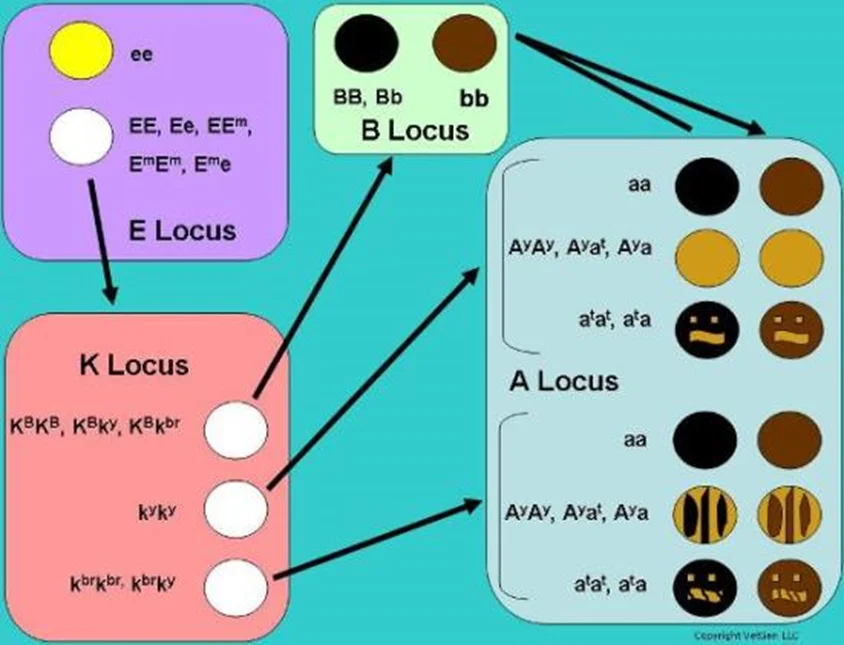
The loci “A”, “B”, “E” and “K” are the main ones involved in determining coat color, being jointly responsible for the concentration and distribution of eumelanin and pheomelanin in the hair; Figure 12 shows the interactions between these genes, taking into account the hierarchy and their role in coat color, as well as the effects of epistatic interactions (VETGEN, 2012).
Figure 12: Interaction between the loci “A”, “B”, “E” and “K”
Source: VETGEN, 2012.
2.3.5 Locus D
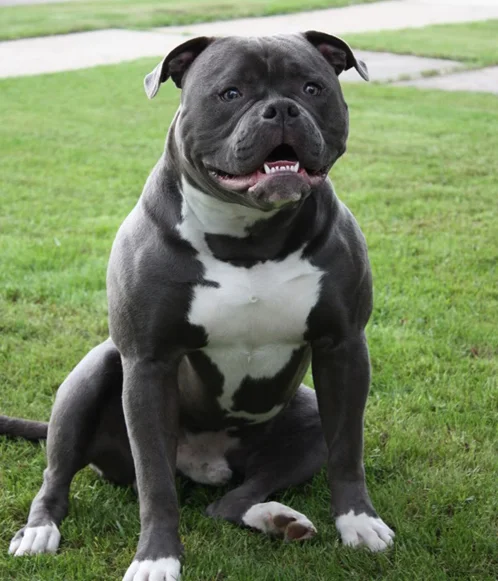
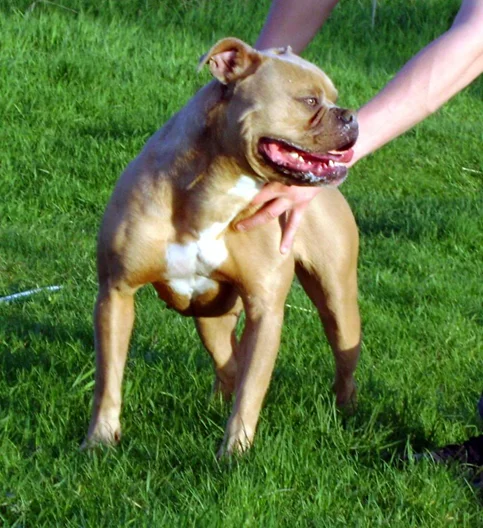
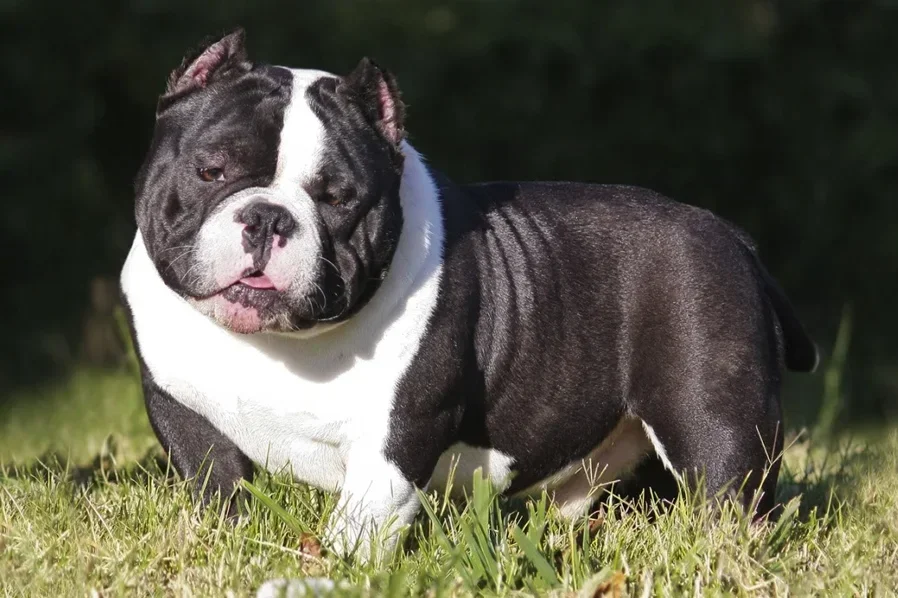
It is known as the locus of “dilution”, responsible for controlling the intensity of the color. This gene has two alleles: 1- “D” expresses intense, even coloring; 2- “d” expresses the diluted phenotype, a recessive mutation of the protein Melanophilin (MLPH). As for eumelanin, a black coat is diluted to gray (blue, Figure 13) and chocolate to Isabella. Diluted pheomelanin is called “blue fawn” (when the dog is “B”) or “Isabella fawn” (when the dog is “bb”) (RUVINSKY, 2001; SCHMUTZ, 2012; VETGEN, 2012).
The order of dominance of these alleles is: Alleles D > d.
| Figure 13: Dog with a diluted (dd) black coat, expressing the blue phenotype |
| Source: Manstoppers, 2012.
| Figure 14: Dog with a diluted (dd) pheomelanin coat, expressing the “blue fawn” phenotype
| Source: Manstoppers, 2012.
2.3.6 Locus S
This gene (MITF) is responsible for the distribution (markings) of white areas in the coat. It does not affect the iris, nose, nails and paw pads. This gene has four alleles: 1- “S” produces dogs with no white areas; 2- “Si” expresses the phenotype called the “Irish collar”, characterized by white markings on the muzzle and/or feet and/or tail tip and/or chest and/or belly and/or neck (Figure 15); 3- “Sp” results in white-spotted individuals; 4- Sw = a dog with an all-white coat, which may have a pigmented patch on the tail, ear or foot; it is very common in the American Bulldog breed because of the selection applied to the breed during its development (PUTNAM, 1999; RUVINSKY, 2001; SCHMUTZ, 2012).
The order of dominance of these alleles is: Alleles S > Si > Sp > Sw
| Figure 15: Dog with an Irish collar “Si”
| Source: Pedigree Database, 2012.
| Figure 16: White-spotted dog “Sp”
| Source: Pedigree Database, 2012.
| Figure 17: Dog with a white coat “Sw”
| Source: Pedigree Database, 2012.
3 METHODOLOGY
3.1 LOCATION
This study was carried out at Sunshine Land Kennel, in the city of Teresópolis, in the mountain region of the state of Rio de Janeiro.
Sunshine Land Kennel specializes in breeding American Bulldogs and currently has 35 breeding dogs, 10 males and 25 females. It holds the title of best breeder for 2008, 2010 and 2011, and the dogs it has bred have been considered the best of the breed in Brazil since 2007, according to the ranking of the Confederação Brasileira de Cinofilia. The kennel currently produces about 30% of the dogs of the breed registered each year.
3.2 DESCRIPTION OF THE STUDY
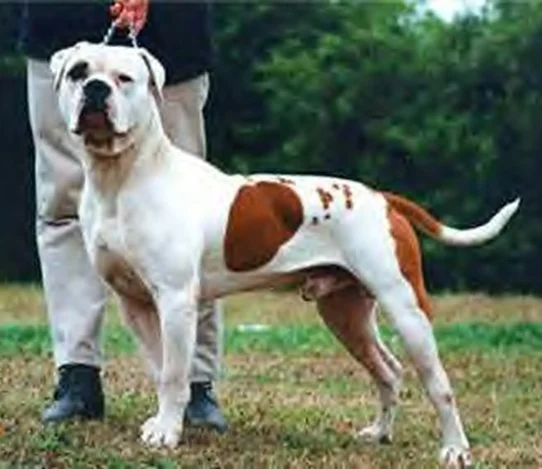
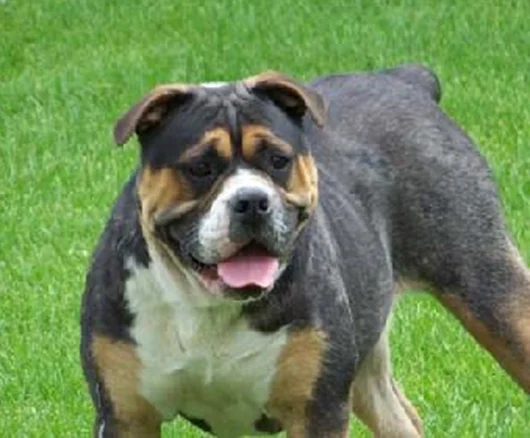
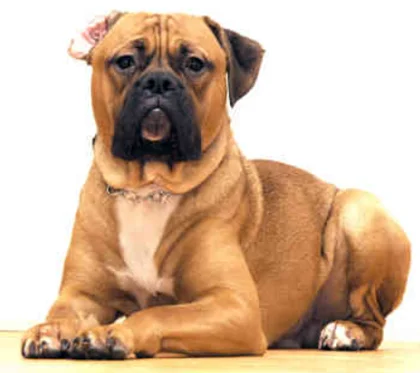
In June 2011, Sunshine Land Kennel acquired an Olde English Bulldogge named Bullforce Blue Euro (Figure 18) from the Bullforce kennel in the Netherlands. Although registered as an Olde English Bulldogge, this dog is the offspring of the sire Bullforce Sharky, an Olde English Bulldogge (Figure 19), and the dam Bullforce Princess, an American Bulldog (Figure 20).
Both Bullforce Blue Euro and his parents carry the diluting allele in homozygous form (dd) in their genotype, expressing a phenotype called blue or gray.
Figure 19 - Bullforce Blue Euro
Source: The author, 2012.
Figure 19 - Sire Bullforce Sharky, an OEB
Figure 20 - Dam Bullforce Princess, an American BulldogIn the second week of February 2012, Bullforce Blue Euro was mated by natural breeding with the American Bulldog dam SunshineBulls’ Candice of Bullybred (Figure 21), daughter of the sire Barbosa's Bossman of Maple Grove (Figure 22) and the dam Ricabal's Mariposa (Figure 23).
SunshineBulls’ Candice of Bullybred is registered as chocolate; her dam is brindle and her sire is fawn (pheomelanin).
Figure 21: SunshineBulls’ Candice of Bullybred
Source: Pedigree Database, 2012.
Figure 22 - Barbosa's Bossman Figure 23 - Dam Mariposa 4 RESULTS AND DISCUSSION
The litter from the mating of the sire Bullforce Blue Euro with the dam SunshineBulls' Candice of Bullybred was born on April 11, 2012. Ten puppies were born: 3 females and 7 males.
The puppies are 75% American Bulldog and 25% Olde English Bulldogge by blood, since the dam is a purebred American Bulldog and the sire is half-blood.
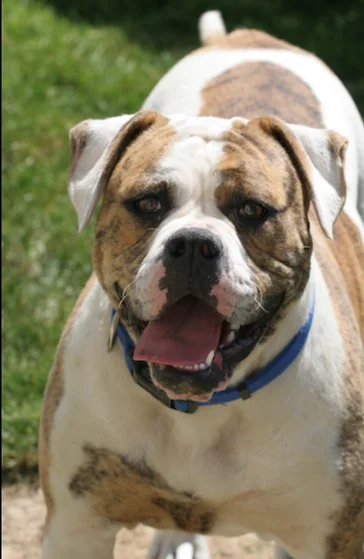
Of the 10 puppies born, 8 showed a diluted phenotype: 4 Blue and 4 Isabella.
At first, no Blue or Isabella puppies were expected in the F1, since neither the dam nor her recent ancestry showed this phenotype. The initial idea was to produce heterozygous “Dd” dogs and, from them, obtain diluted puppies in the F2.
However, as Ruvinsky (2001), Schmutz (2012) and Vetgen (2012) describe, the diluted phenotype is recessive, so it may have stayed hidden for many generations in dogs carrying the allele (Dd) that did not express the phenotype, since the non-diluted form is dominant.
These results are supported and described by Vetgen (2012), which states that, because of the complexity of the combinations between genes and the alleles of each gene, the phenotype of a given color may stay hidden for many generations in a dog's descendants.
5 CONCLUSIONS
Although the diluted phenotype is rare in this breed, the diluting allele is present, making it possible to select for an increase in the frequency of blue, Isabella and “fawn” dogs in this breed.
Studies on coat color are very scarce worldwide, and for the American Bulldog breed there is practically no information on coat genetics. No source was found in Brazil, which justifies further studies.
6 FINAL CONSIDERATIONS
The study is still being carried out at Sunshine Land Kennel. In September 2012, “Bullforce Blue Euro” was mated by natural breeding with an American Bulldog dam named “Bowman’s Blue” (Figure 34), a blue brindle female. The pregnancy has been confirmed and the litter is due in the second week of November.
In October 2012, “Bullforce Blue Euro” was mated by natural breeding with an American Bulldog dam named “BullyBred Black Widow” (Figure 31), a black brindle female. The pregnancy has been confirmed, with the litter due in the second week of December.
REFERENCES
AMERICAN BULLDOG KENNEL CLUB. A. B. K. C. Standards. Available at: <http://www.abkc.fws1.com/custom.html>. Accessed on: Dec. 2, 2012.
CANDILLE, S. I.; KAELIN, C. B.; CATTANACH, B. M.; YU, B.; THOMPSON, D. A.; NIX, M. A.; KERNS, J. A.; SCHMUTZ, S. M.; MILLHAUSER, G. L; BARSH, G. S.. A b-Defensin Mutation Causes Black Coat Color in Domestic Dogs. Science, V.318, P.1418-1423, 2007.
CONFEDERAÇÃO BRASILEIRA DE CINOFILIA - CBKC. Official Standard of the American Bulldog Breed. 2005. Available at: <http://www.cbkc.org/padroes/pdf/grupo11/bulldogamericano.pdf>. Accessed on Oct. 23, 2012.
INTERNATIONAL OLDE ENGLISH BULLDOGGE ASSOCIATION - IOEBA. IOEBA Breed Standard. 2006. Available at: <http://www.ioeba.net/Old_english_bulldogge_breed_standard.htm>. Accessed on: Oct. 23, 2012.
KERNS, J. A.; EDWARD, J.; CARGILL, E. J.; CLARK, L. A.; CANDILLE, S. I.; BERRYERE, T. G.; OLIVIER, O.; LUST, G.; TODHUNTER, R. J.; SCHMUTZ, S.M.; MURPHY, K. E.; BARSH, G. S.. Linkage and Segregation Analysis of Black and Brindle Coat Color in Domestic Dogs. Genetics, v.176, p.1679-1689, 2007.
PUTNAM, D.. The Working American Bulldog. Woodside, California: Bulldog Press, 1999. 189p.
RUVINSKY, A.; SAMPSON, J.. The genetics of the dog. London, England: CABI Publishing, 2001. 564p.
SCHMUTZ, S. M.. Genetics of coat color and type in dogs. Website built and maintained by Dr. Sheila M. Schmutz - Department of Animal and Poultry Science - College of Agriculture and Bioresources - University of Saskatchewan, Saskatoon, Canada. Available at: <http://homepage.usask.ca/~schmutz/dogcolors.html>. Accessed on Oct. 31, 2012.
TENSET TECH. Canine Genetics Primer. Available at: <http://www.tenset.co.uk/doggen/indexus.html>. Accessed on: Oct. 21, 2012.