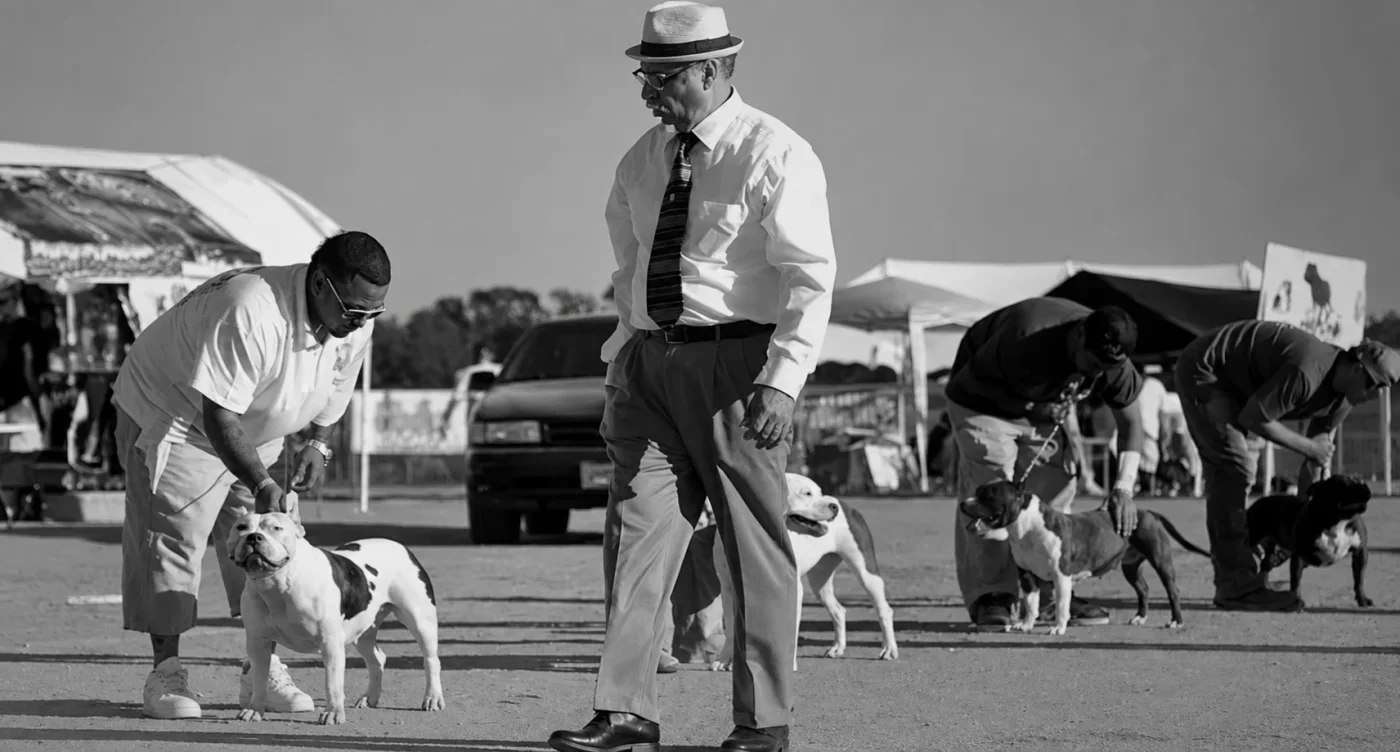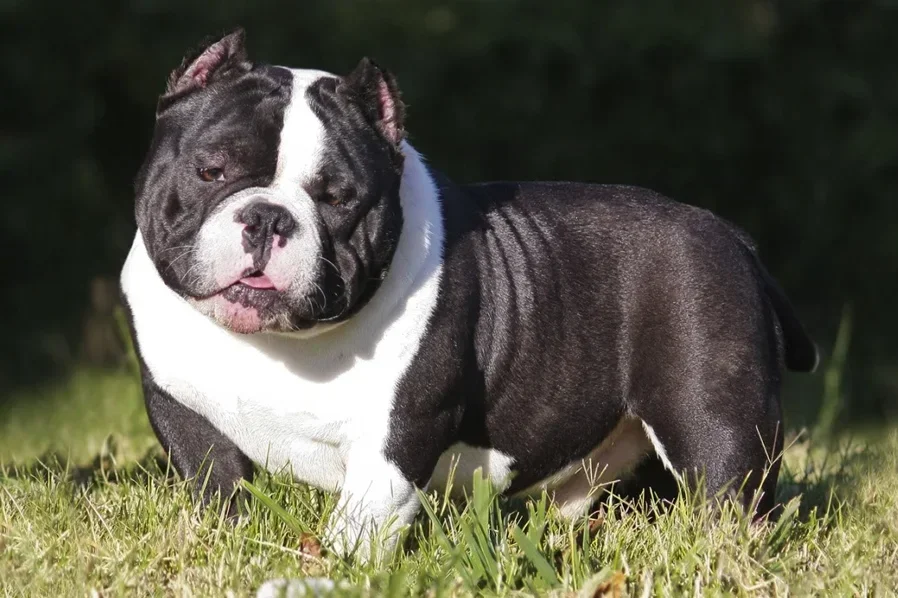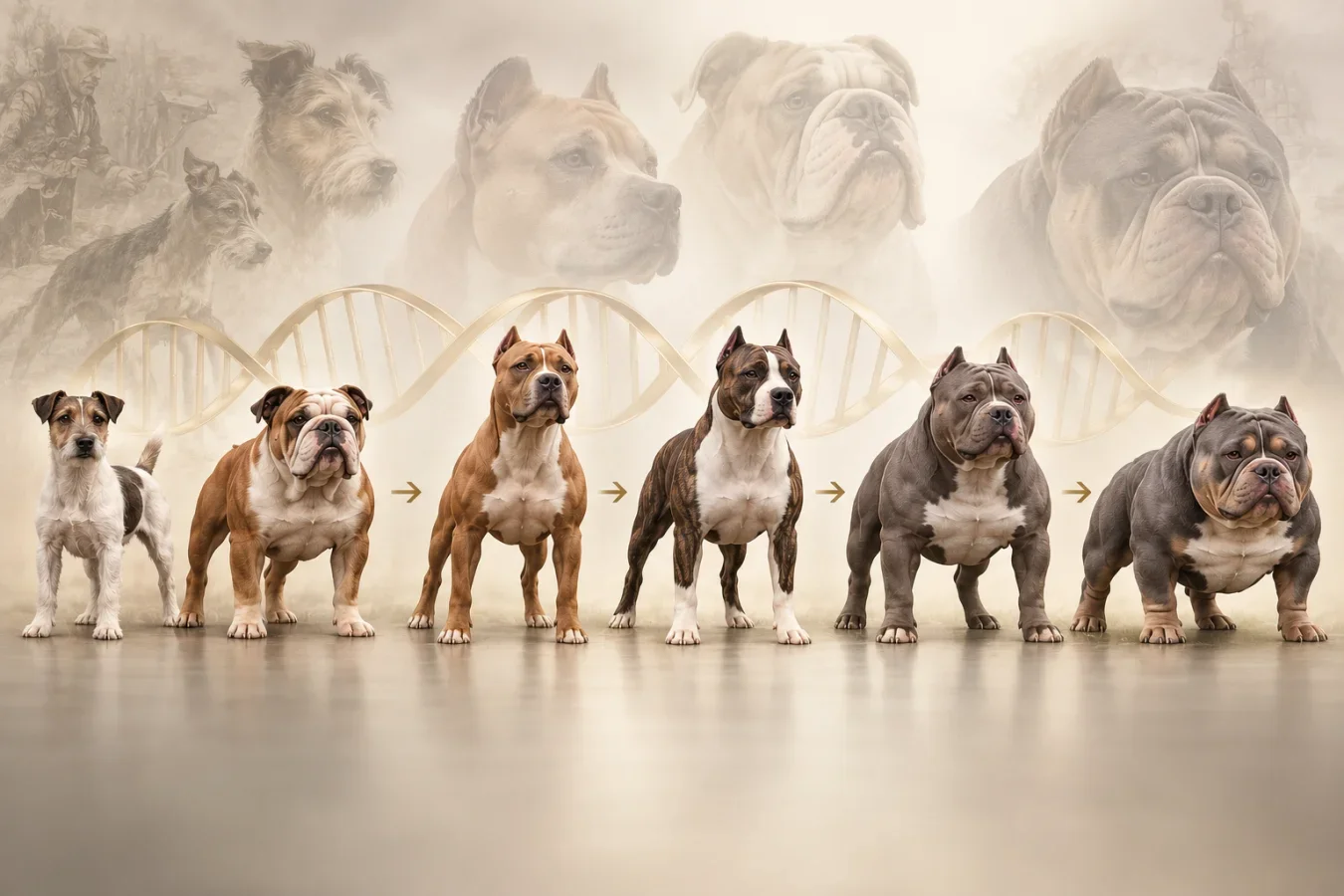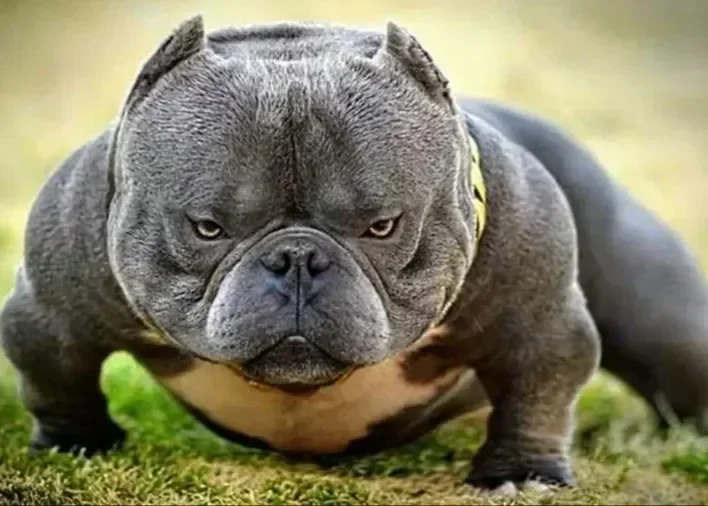
In recent years, a group of bull-type dogs, but significantly smaller and more compact, began to gain prominence in the dog world. These dogs, popularly known as “Exotics”, were initially registered as American Bullies, but they already showed clear differences in structure, body proportions, movement and even temperament, gradually forming an identity of their own within breeding.
These dogs were developed through successive genetic selection and the introduction of different bulldog lines over the years, a process widely known among breeders. However, many of these introductions happened without formal pedigree records, making it impossible to determine with absolute precision the full genetic makeup used in their early development.
Over time, it became clear that these dogs did not represent just an aesthetic variation, but a new phenotypic and functional direction. Faced with this reality, IBC (International Breed Certificate) became the first institution in the world to officially separate these dogs from the registries in which they had previously been grouped with the American Bully, recognizing that the so-called “Exotics” already had characteristics distinct enough to follow their own path in the dog world.
From that moment on, IBC began structuring a specific standard for this new breed, allowing, even in this early stage of development, greater genetic transparency in the studbook and encouraging breeders to use real information about the lines introduced, without the need for concealment or inaccurate records.
IBC stresses that the goal of the breed has never been to encourage structural exaggerations that harm animal welfare, but to seek dogs with their own identity, good functionality, health, balanced temperament and genetic quality. The standard will continue to be revised over the years, following the responsible evolution of the breed and the technical advances of modern dog breeding.
BREED STANDARD
GENERAL DESCRIPTION: The ideal “Exotic Bully” is a broad, compact dog with a large, powerful head and a sturdy, muscular body. Its temperament is very stable, making it a loyal companion and a member of the family. Dogs of this breed love to please their owners, are very affectionate with people and sociable with other animals. They are companion dogs.
HEAD: It should be large, broad and well chiseled; the circumference of the head should be equal to or greater than the dog's height at the withers.
Viewed in profile, the face is short from the occiput to the nose; the stop should be well marked, with a high, slightly wrinkled forehead. Viewed from the front, the face shows well-developed cheekbones and pronounced cheek muscles. Distance between the eyes: they should be moderately apart, but without exaggeration. The head is slightly wrinkled.
A narrow head, or one that looks too small for the body, is a fault.
MUZZLE: Broad, deep and short, with moderate wrinkles. The bite should be undershot, but the lower canines should not protrude. Very narrow nostrils and over-nose wrinkles are not desirable. Dogs showing extreme breathing difficulties are undesirable and should not be encouraged. Muzzles that are too long are considered faults.
NOSE: Broad, with open nostrils. The nose should not be set in between the eyes. The nose should be solidly pigmented; all colors are accepted. Total absence of pigment is a disqualifying fault.
BITE: The bite should be scissor, and may be slightly undershot; the teeth not should be visible with the mouth closed, and the lower canines not should protrude. A level bite is accepted. Wry jaws and excessive undershot bites are considered serious faults.
UPPER / LOWER JAW: They should be broad, strong and square, with canines set apart. Viewed from the front, the lower jaw should look well defined and fit well with the upper jaw.
EARS: Rose ears set on the sides of the head are preferred. Fully erect ears set on top of the head are accepted. Drop ears are allowed, as long as they are small and do not resemble those of a “hound”. Large, pendulous hound-type ears are a disqualifying fault. The ears may be natural or cropped.
EYES: They should be in harmony with the face, showing a strong, striking expression. They should be moderately apart and medium-sized. Any color is acceptable; however, wall eyes are not accepted. Deformed, bulging, crossed and asymmetrical eyes are considered a serious fault.
NECK: Short, thick, deep and strong, well arched, with tight skin keeping the musculature visible and well defined.
TRUNK: Muscular, short, broad, with well-sprung ribs, very compact to the extent that it does not compromise the dog's health and movement.
BACK: Males should look square and balanced. Females should be similar, tending to have a slightly longer body. The back should be short, level or slightly rising.
CHEST: ribs well sprung (rounded), chest broad and deep. The depth of the chest should reach the elbows. An empty or narrow rib cage should be considered a serious fault.
SHOULDERS: Broad and muscular, giving the appearance of maximum substance. The shoulders should be well laid back and angulated. Straight shoulders are a fault.
TAIL: Set low, smooth, without coarse hair. Ideally, the tail reaches the hock. Shorter tails that are smooth and without kinks are also allowed. A long tail should be carried low and never over the back. Short, curled, twisted, knotted, kinked or docked tails are considered minor faults. No type of tail is considered a serious or disqualifying fault.
FOREQUARTERS: Short, strong legs with heavy bone, but not so short as to impair the dog's activity. The legs should be set well apart. The elbows should be relatively close to the body and well placed, and may be slightly bowed. Forearms: Very sturdy and strong, well developed and muscular, and may be slightly bowed. The feet should preferably be straight, round and firm, but feet turned slightly outward are also allowed. Pasterns should be short and strong; weak pasterns or splayed feet are considered faults.
Lack of bone mass is very undesirable. Loose elbows are a serious fault. Crooked legs are considered faults and are penalized according to the severity of the problem.
HINDQUARTERS: The legs should be short and well muscled, with round feet. The hind legs should have good stifle angulation to allow good movement. Straight, poorly angulated or cow-hocked legs are considered faults and are penalized according to the severity of the problem. Croup, ischium, thigh, joints, hock angulation, rear pastern and feet should be in harmony, showing a very strong dog, to the extent that it does not compromise the dog's health.
MOVEMENT: Because of its maximum substance, this breed does not have loose, light movement. Its gait is made of short, quick steps, and the feet are not lifted high when the dog moves. However, dogs should trot on their own; dogs that are dragged or that show difficulty moving have a fault, which depending on its severity is grounds for disqualification.
COAT: Soft hair, fine in texture, short, close and smooth.
COLOR: all colors are accepted except albinism.
SIZE:
Nano: dogs up to 25.5 cm, females and males.
Micro: dogs from 25.6 cm to 35 cm, females and males.
Extreme: dogs from 35.1 cm to 43 cm, females and males.
The official measurement should be taken at the withers, the highest point of the thoracic scapular region. In dogs with very developed musculature in the trapezius and front back region (popularly called the “hump”), there may be a difference between the height breeders perceive visually and the real anatomical height measured technically at the withers. Muscle development in this region must not be used to artificially increase the impression of the dog's height or change its size classification.
Height should be in harmony with weight; height and weight above the standard should be discouraged, and the dog should keep the proportions described, with maximum substance, without losing its “Bully”, stocky look. Dogs should be in good physical condition; obesity is not desirable.
TEMPERAMENT: Its temperament is very stable, making it a loyal companion and a member of the family. Dogs of this breed love to please their owners, are excellent with children, very affectionate with people and sociable with other animals. They are companion dogs.
FAULTS: Any departure from this standard should be considered a fault and penalized in proportion to its severity and its effects on the dog's health.
DISQUALIFYING FAULTS:
Any dog showing any sign of aggression toward people.
Serious structural deviations or signs of abnormalities.
Extreme difficulty moving.
Insufficient breed characteristics, so that the dog as a whole does not sufficiently resemble other members of its breed.
Excessively narrowed nostrils
Long coat
Males that do not have two apparently normal testicles fully descended into the scrotum.
All rights reserved to IBC; this information may not be copied or altered. Institutions wishing to use this material should contact the club.
Standard written by Lincoln Fernandez, Beatriz Taques and Bruno Monteiro.
Standard revised by Beatriz Taques and Bruno Monteiro.
Translated into English by Bruno Monteiro.