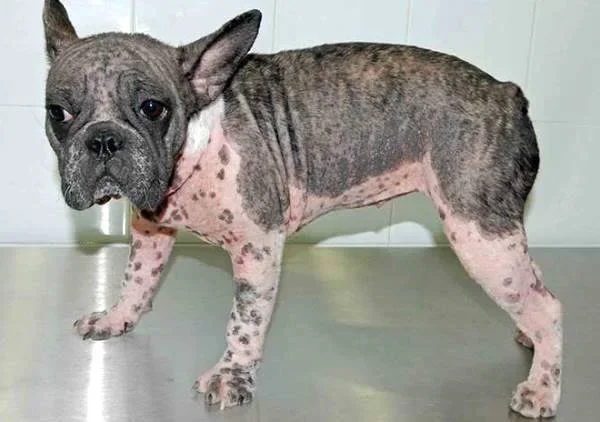
A very controversial and widely discussed topic in the dog world concerns skin overgrowth of the Demodex sp. mite, mainly in puppies and in females during breeding season. The mite is a normal resident of the skin; in other words, virtually all animals carry the mite on healthy skin. The disease only sets in when the immune system cannot keep the parasite population under control.
Demodectic mange is divided into 2 groups: juvenile demodicosis, which affects young animals between 3 and 18 months and may be localized or generalized; and adult-onset demodicosis, usually related to diseases that cause immunodeficiency, such as tumors, hyperadrenocorticism, hypothyroidism, immunosuppressive drug treatments or diabetes, in middle-aged and older animals.
There is a great misconception about affected animals regarding mite overgrowth. Many say the disease is genetic and incurable, which is not true. Demodectic mange may appear spontaneously in young animals between 3 and 6 months of age, because of the modulation of the immune system. This does not mean the animal will keep showing clinical signs of the disease. Most of the time, the disease is self-limiting and is directly related to the following factors: stress, such as moving to a new home, worms and inadequate nutrition.
Purebred animals are overrepresented, because their owners more often seek veterinary services for diagnosis and treatment. It is worth noting that many puppies already show mite overgrowth at their new owners' homes, because the stress of transport and arrival in a new environment increase the secretion of cortisol, the stress hormone. It is known that animals under stressful conditions are more prone to skin overgrowth of the mite.
Animals with localized juvenile demodicosis usually recover without any treatment. The animal's adaptation to its new environment usually reduces the release of cortisol, a decisive factor in the excessive growth of the mite.
Neutering the affected animal is only recommended for generalized cases that have affected the animal since its juvenile age and that have no other underlying immunosuppressive disease. Neutering a growing animal with a localized case, without giving it the chance to modulate its immune system, is excessive and should be avoided. Adult animals with generalized disease and no known underlying disease should be removed from breeding.
There are ways to minimize mite growth in young animals, through vitamin E supplementation, proper nutrition, an enriched environment and correct vaccination and deworming protocols. Breeders should inform buyers, in a formal contract signed by both parties, that mite growth may occur in some areas of the skin because of the change of environment and the stress of transport.