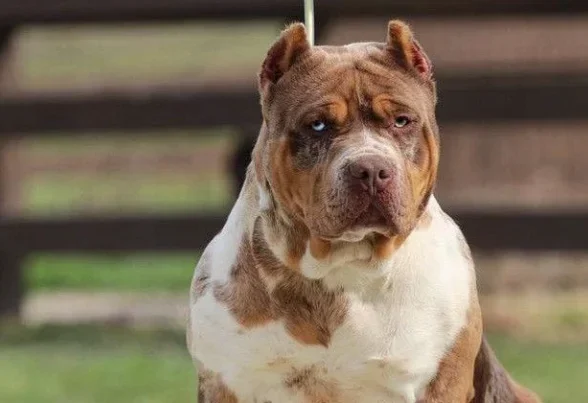
Dog colors
This article was written by Beatriz Taques, a veterinarian and animal scientist with more than 20 years of experience breeding and selecting purebred dogs, president of IBC and active in the technical, genetic and structural development of breeds in Brazil and abroad.
First step: Learn to tell the types of melanin apart:
All coat colors and patterns in dogs are created by melanin, which can be classified into two types:
1 Eumelanin: responsible for the range of colors from light brown (lilac) to black;
2 Pheomelanin: responsible for the range of colors from light yellow (cream) to red.
Each pigment has a “default” color, which can be modified by other genes.
Eumelanin:
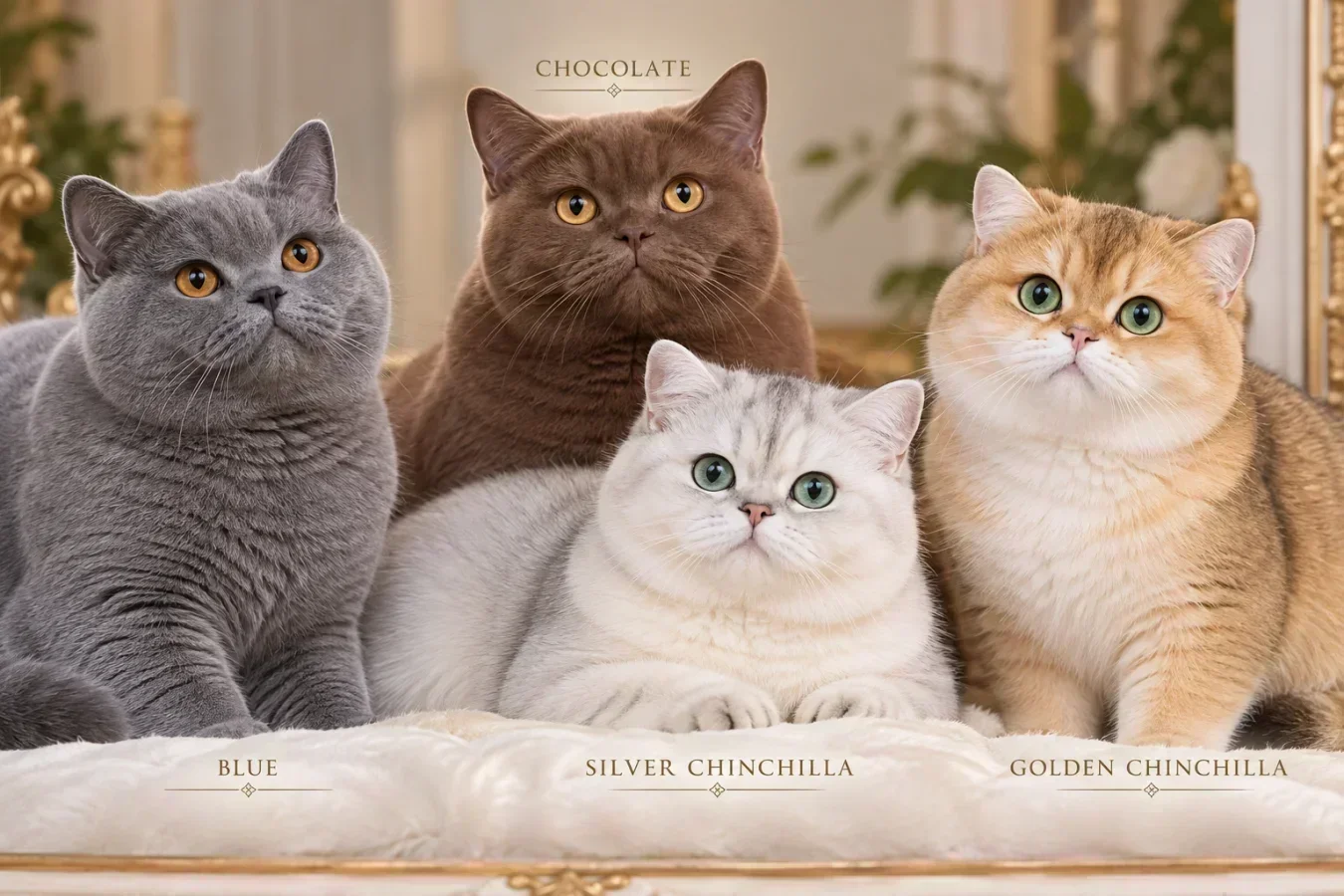
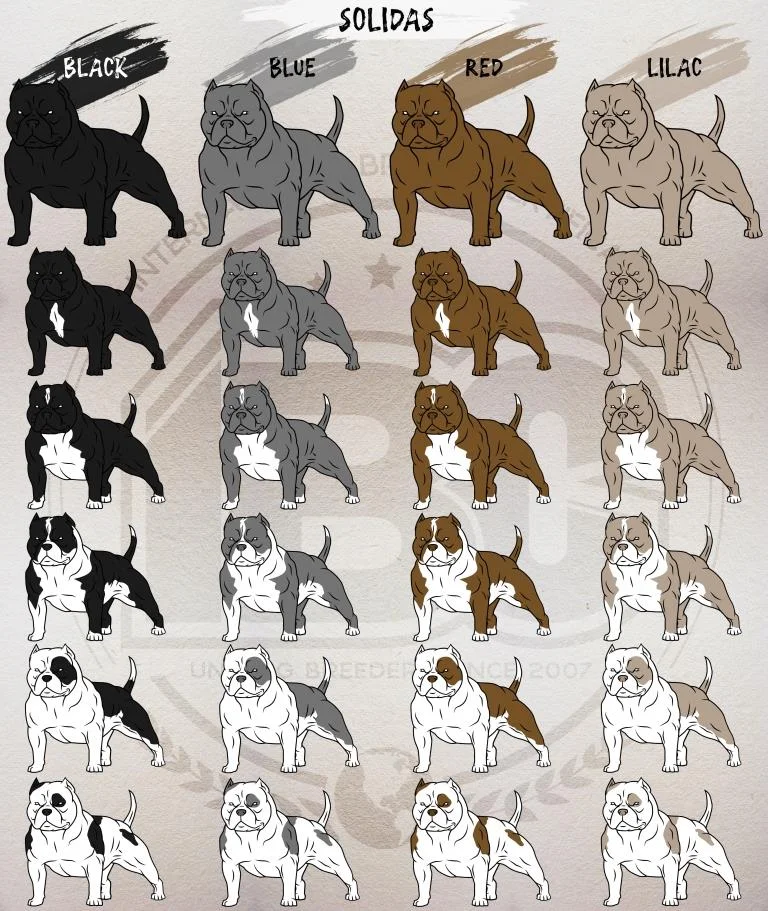
Eumelanin is, by default, the black pigment. All the black areas of a dog are caused by cells that produce eumelanin. However, there are genes that turn eumelanin into other colors: blue, chocolate or lilac. This happens because some genes restrict and/or alter the production of eumelanin.
Besides being found in the coat, eumelanin is present in other parts of the dog that have pigment: most notably the eyes (iris), nose, nails and paw pads. The nose will be black, chocolate, blue or lilac, depending on the type of eumelanin the dog can produce. This means the pigmentation of these areas is also affected, becoming lighter.
In this way, black can be turned into chocolate (Locus B).
Blue is diluted black (Locus D).
Lilac is diluted chocolate (Locus D).
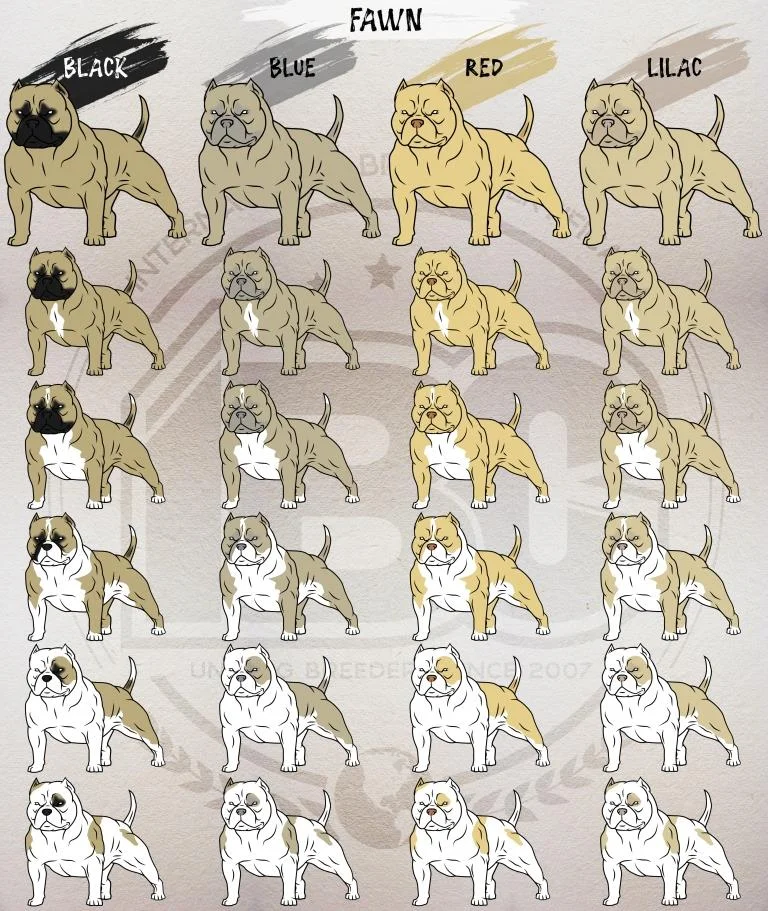
Pheomelanin (Fawn):
The second type of pigment is pheomelanin. This pigment ranges from cream to red, covering everything from deep red (like Irish Setters) to light cream (like the Labrador), including gold, yellow and orange.
Pheomelanin is produced only in the coat, so it does not influence the color of the eyes or nose; therefore, any genes that affect the color/intensity of pheomelanin will not affect the eyes or nose.
Variation in pheomelanin color does not produce distinct colors (as with eumelanin, which can turn black into chocolate), but just one color that varies in intensity.
Pheomelanin and Eumelanin together:
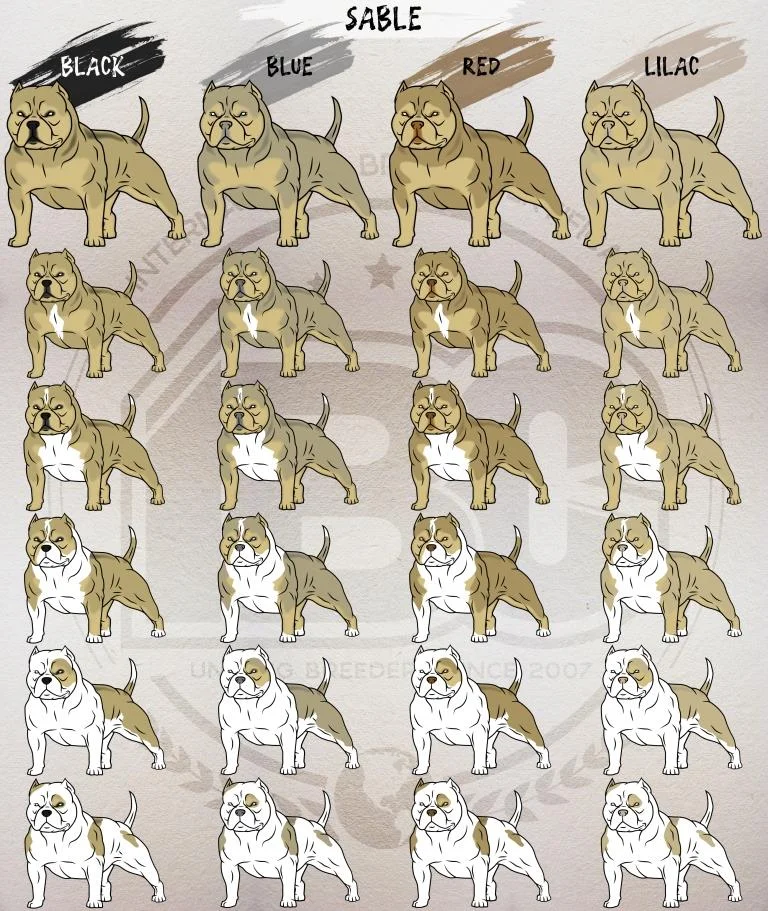
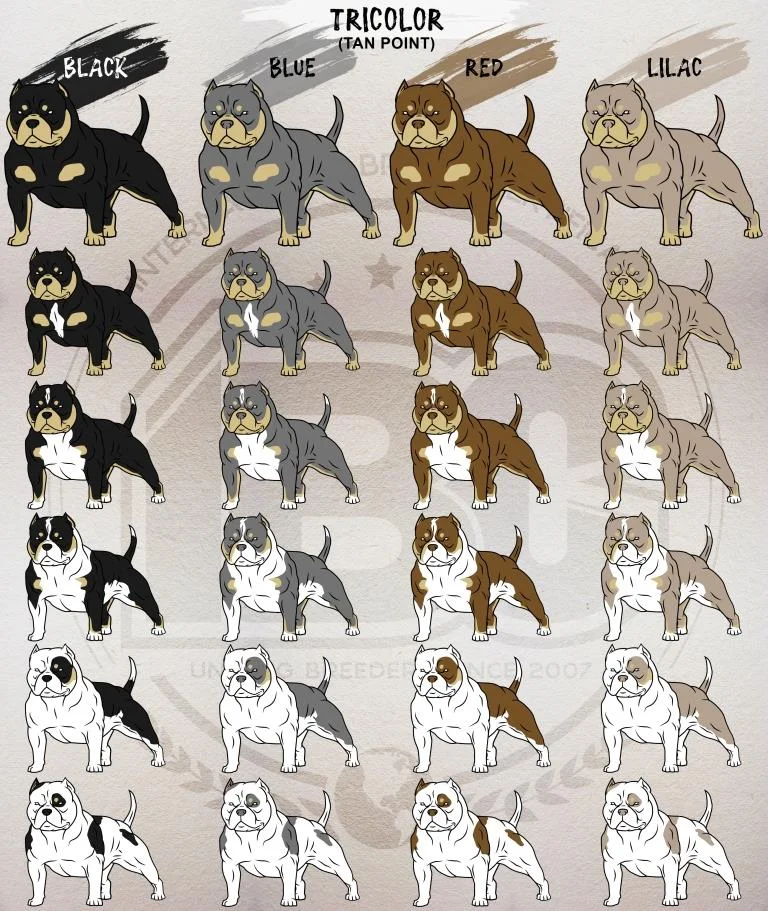
Some dogs have both pheomelanin and eumelanin in their coat, as shown below:
Sable: Shows a scattered mix of eumelanin and pheomelanin.
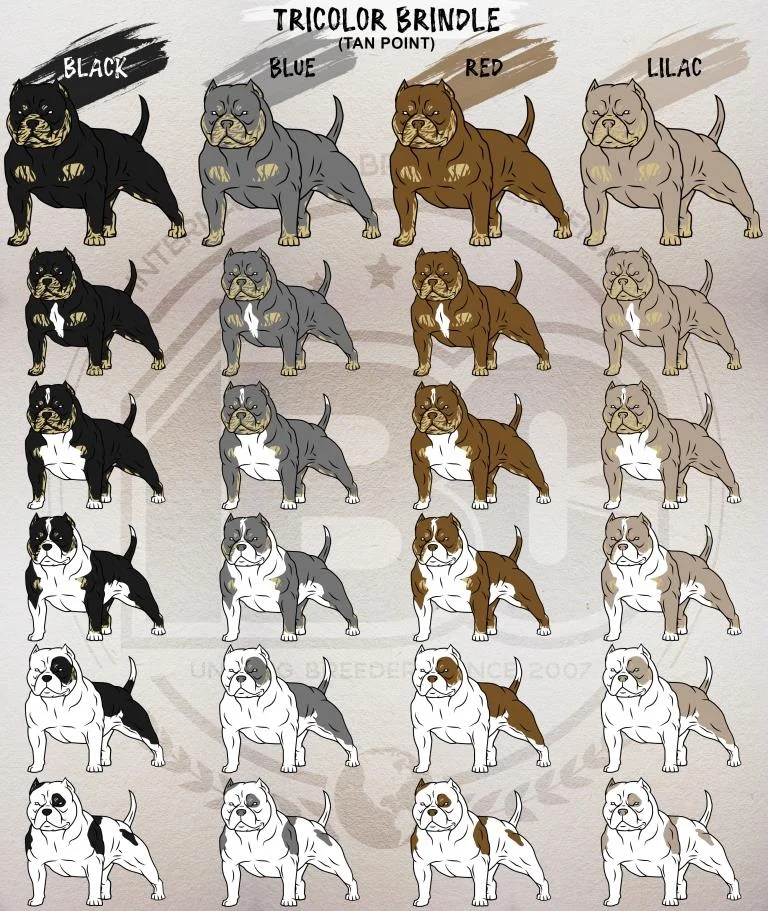
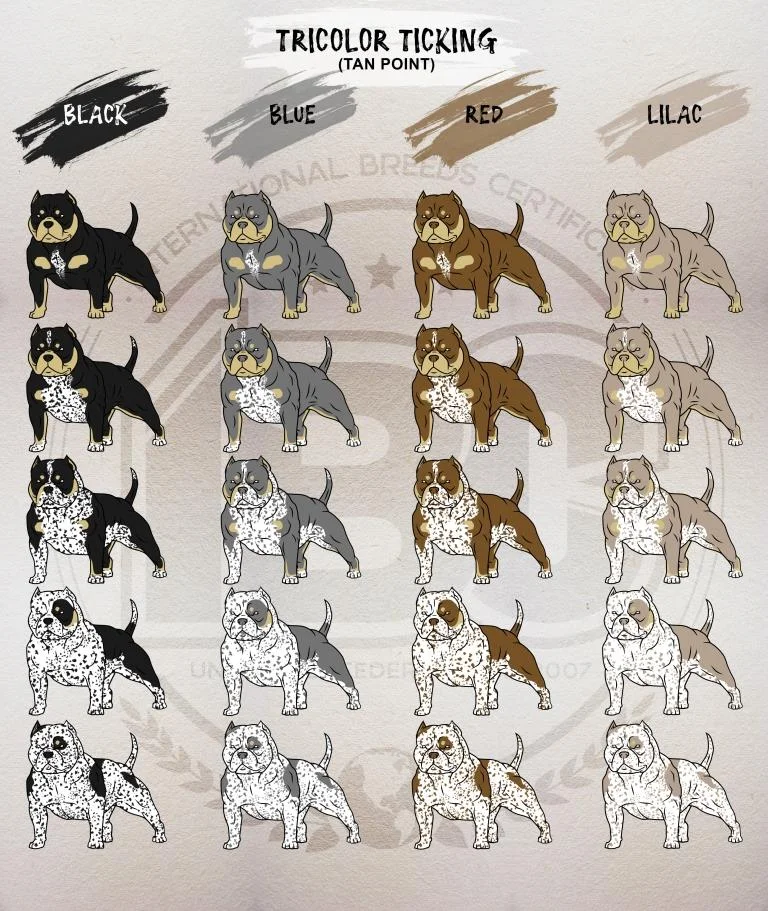
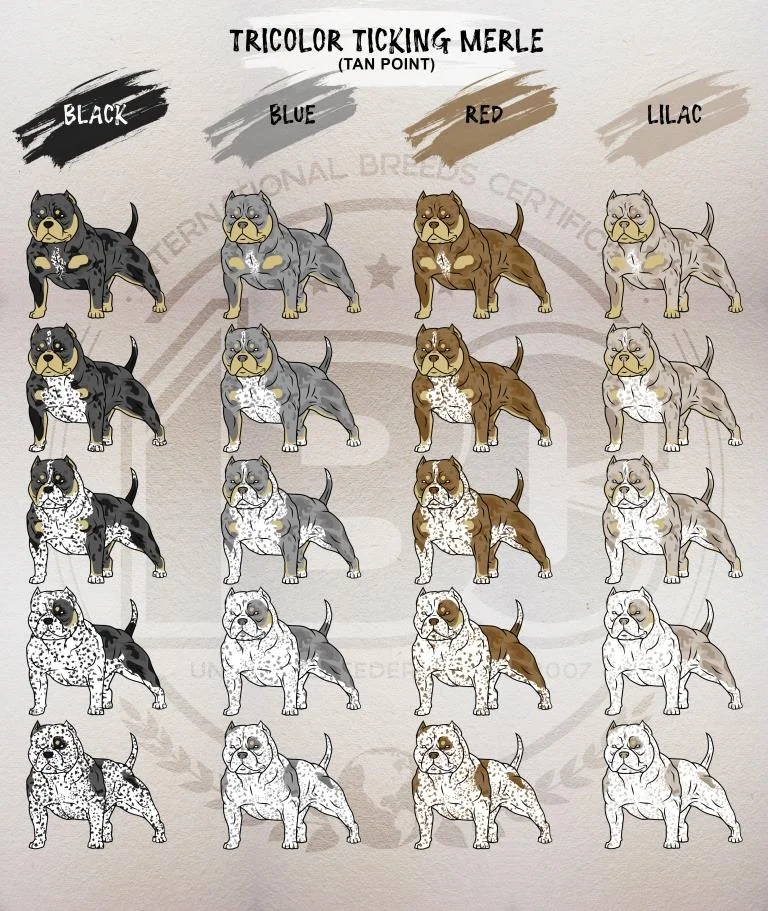
Tan Point (known as “Tricolor”): Note that these dogs have much more clearly defined boundaries between the two pigments.
White
White is not exactly a color: a white coat in dogs is not caused by a pigment, but by a lack of pigment. Sometimes the whole animal is affected, as in albinos, and sometimes only parts of it are affected, as in dogs with white markings.
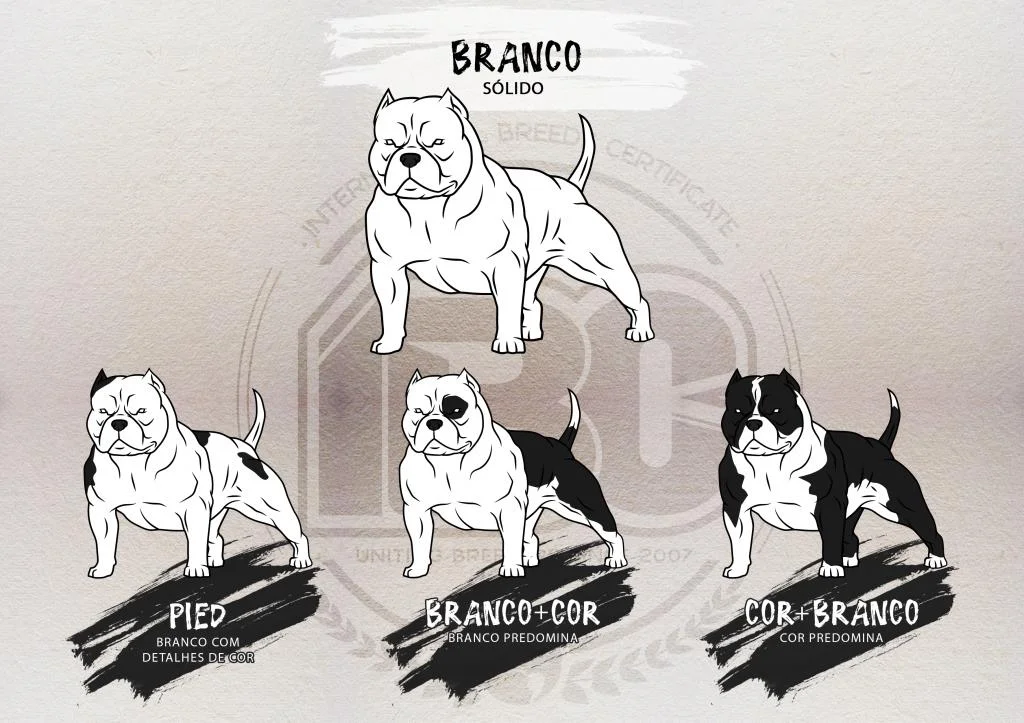
This distribution (marking) of white areas in the coat does not necessarily affect the iris, nose, nails and paw pads. White markings can be divided as follows:
- Solid White: An animal with an all-white coat, which may have very small spots on the tail, ear or paw.
2. Pied: An animal with an almost all-white coat, with a few patches anywhere on the body.
3. White + Color: Results in white individuals with some patches scattered over the body (with white predominating)
4. Color + White: Also known as the “Irish collar”, characterized by white markings on the muzzle and/or feet and/or tail tip and/or chest and/or belly and/or neck, with the color predominating.
5. Dogs with no white markings.
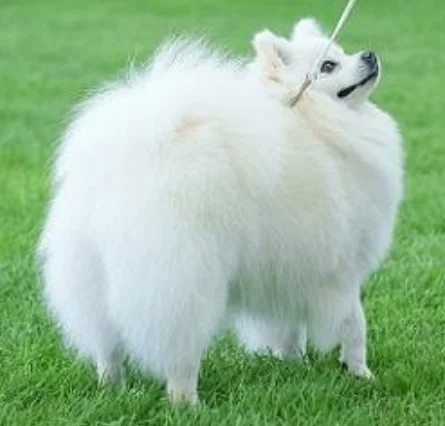
There is also a second type of white, caused by a strong dilution of the red pigment (pheomelanin), which makes the cells produce fewer pigment particles than normal, so that the color becomes lighter. If it is diluted enough, it can become white. Many white dogs have a slight ivory/cream sheen in their coat because their cells are still producing a very small amount of pigment (you can see this clearly in the German Spitz below). This type of white does not usually affect eumelanin, so any area pigmented by eumelanin will stay dark, as will the eyes and nose.
Albino:
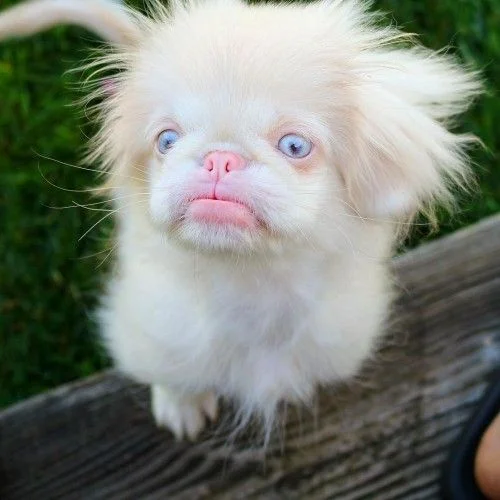
When all melanin production is affected, including in the eyes, muzzle, nails and paw pads, the muzzle looks pink and the eyes blue (or red in true albinos). It is important to note that, although albinism always affects the whole animal, partial albinism exists, in which pigment production is drastically reduced.
Brindle:
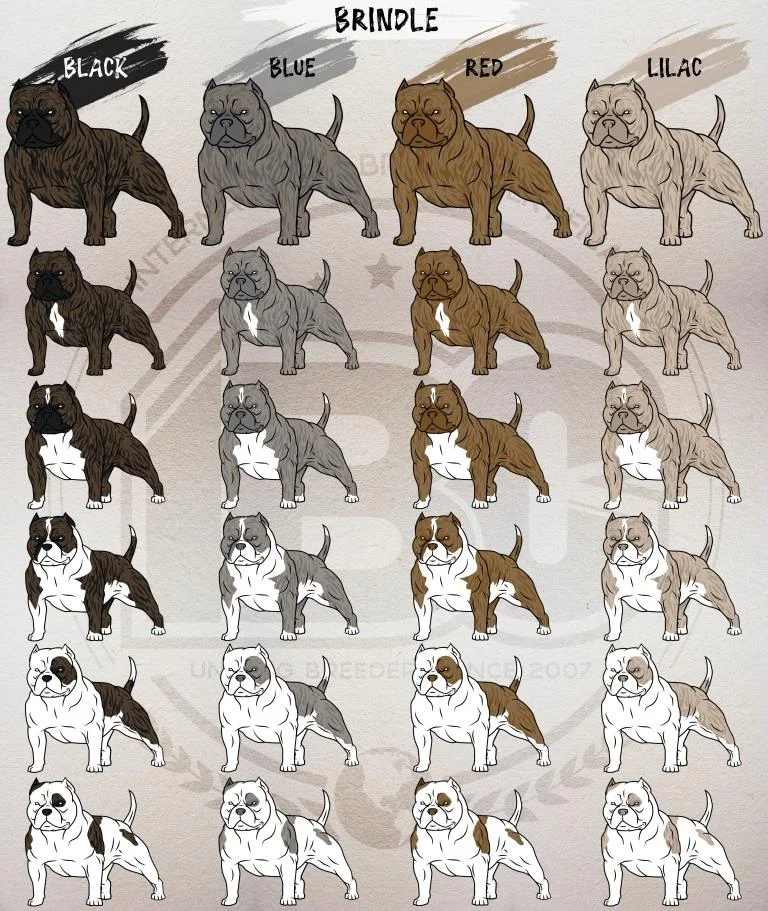
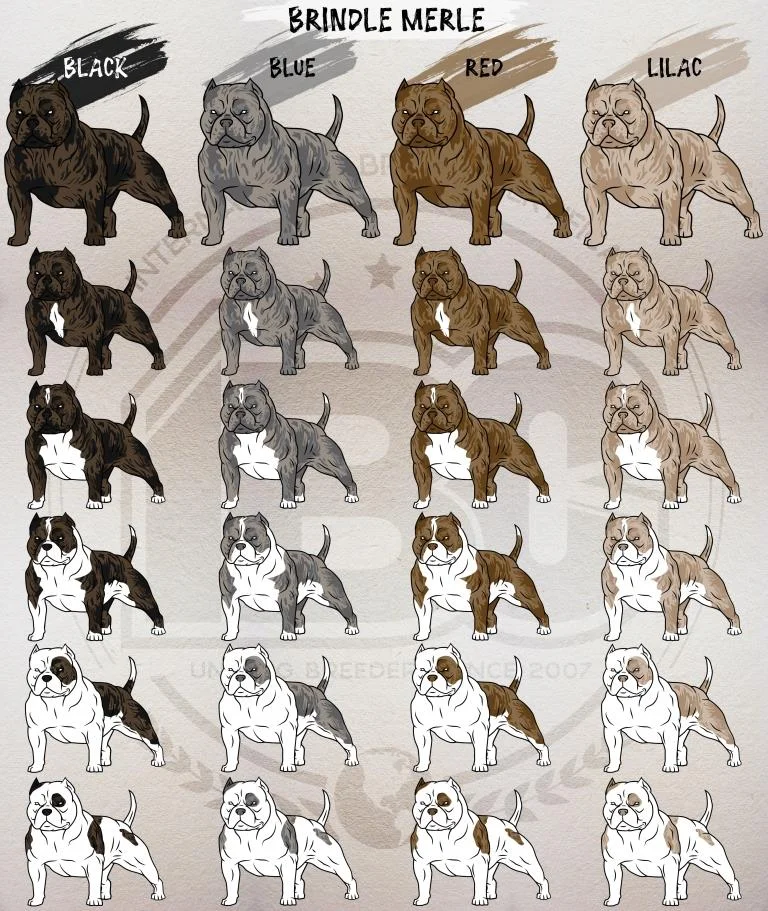
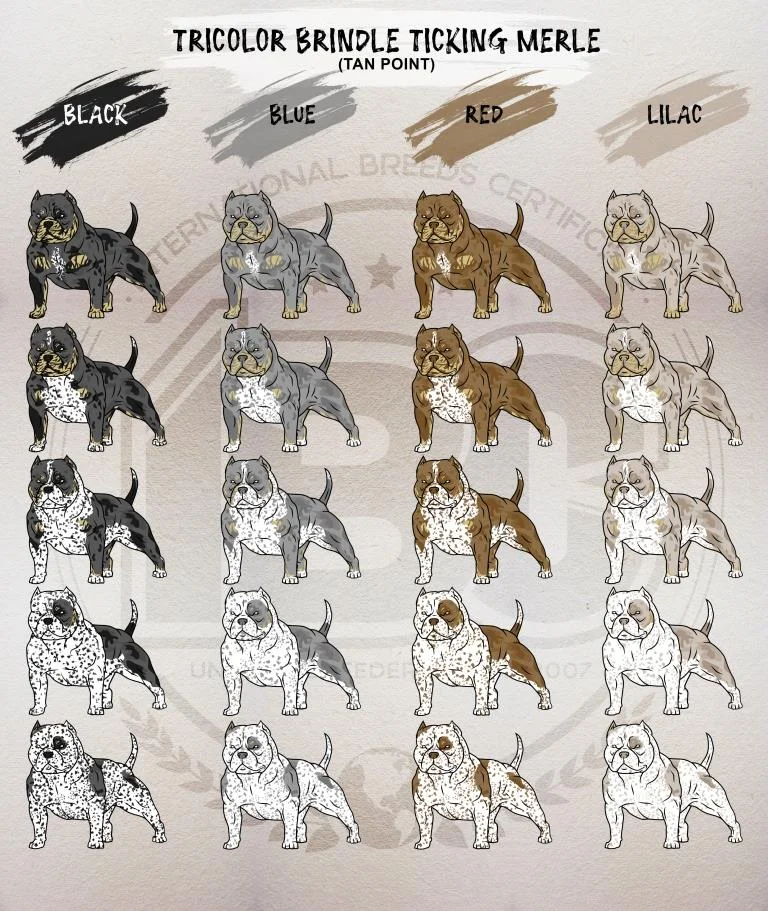
Brindle dogs usually have a coat covered in black stripes on a golden base. The stripes are eumelanin and the base is pheomelanin, so the appearance of these pigments can be changed by any of the genes that usually affect them.
Eumelanin (the pigment that makes up the stripes) can be affected and modified to merle, chocolate, lilac and gray.
Pheomelanin (the pigment that makes up the base) can be affected by the intensity locus.
And, of course, white markings can occur on any brindle dog.
Examples of Brindle:
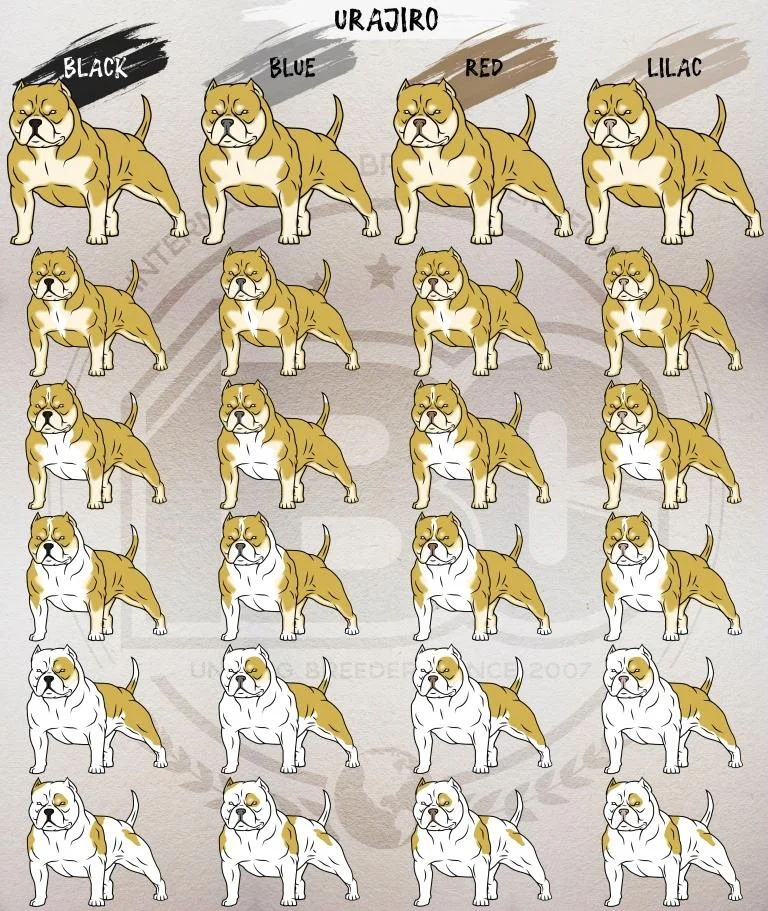
Urajiro:
Urajiro usually shows up in orange dogs, appearing as white or straw-colored areas in the same places they would appear on a “tan point” dog. See the illustration:
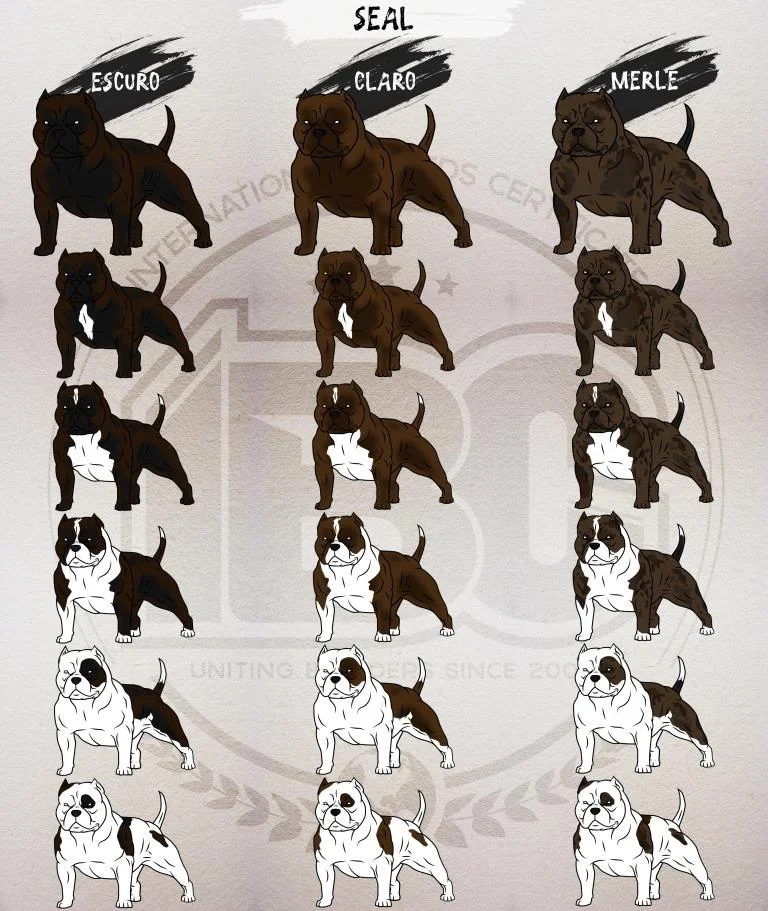
Seal:
The Seal coloring makes black dogs look brownish (with the nose staying black), ranging from a slight brown tone (cola-colored) to a shade almost like liver. There is often a black stripe along the back, and the legs and tail usually stay darker than the main part of the coat. Seal dogs are born dark and become “tanned” as they grow older.
Note: A Seal dog will always have a black nose, however intense the “tan”.
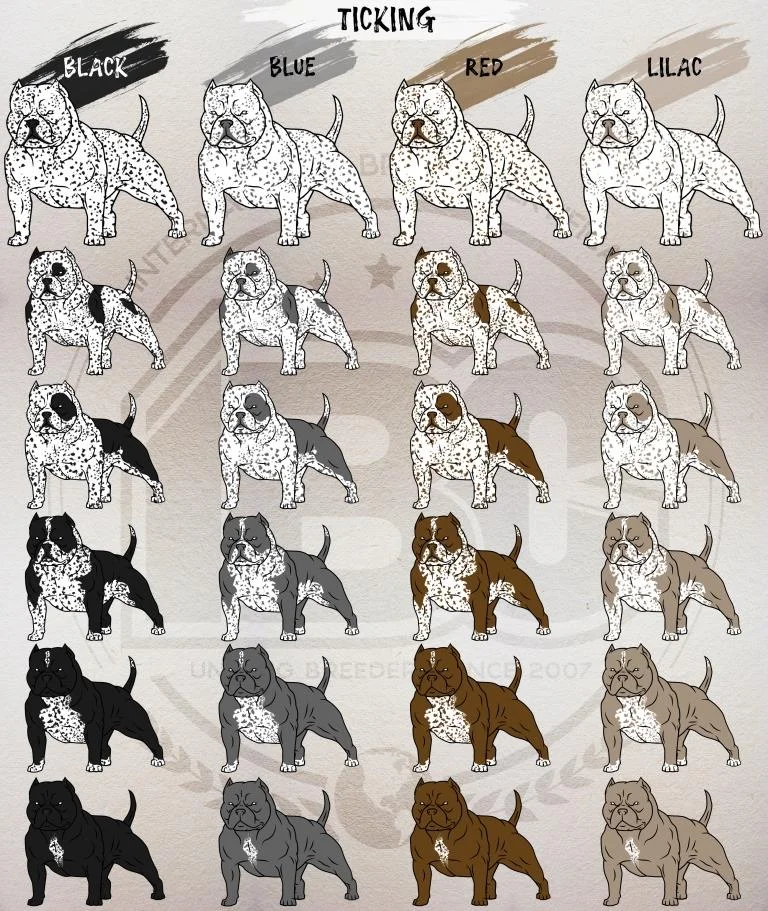
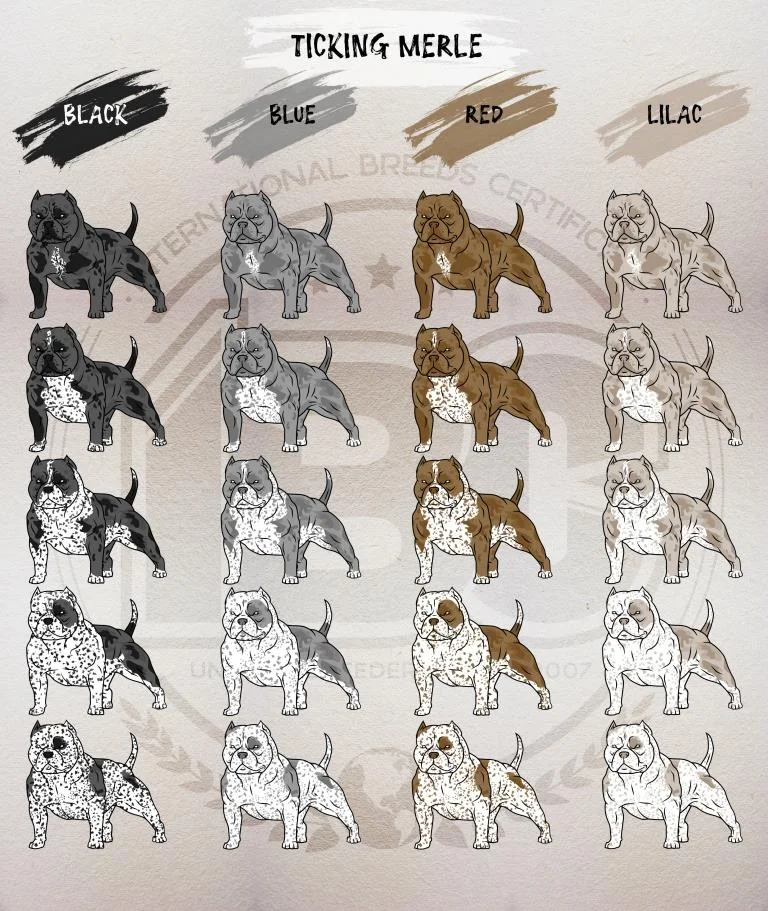
Ticking
“Ticked” or “ticking” dogs are characterized by flecks of color in the white areas of the coat. If a dog has the ticking genes but has no white areas, the ticking will not be visible.
The color of the ticking in all-white dogs matches the color the area would have been pigmented if it were not white.
Merle:
Merle is a coat pattern with many variations! Merles are unusual, beautiful and exotic. However, the main concern for any dog breeder should be health, temperament and conformation.
A certain degree of knowledge is needed when breeding merle dogs, to avoid health problems; that is why merle dogs should only be used by experienced breeders.
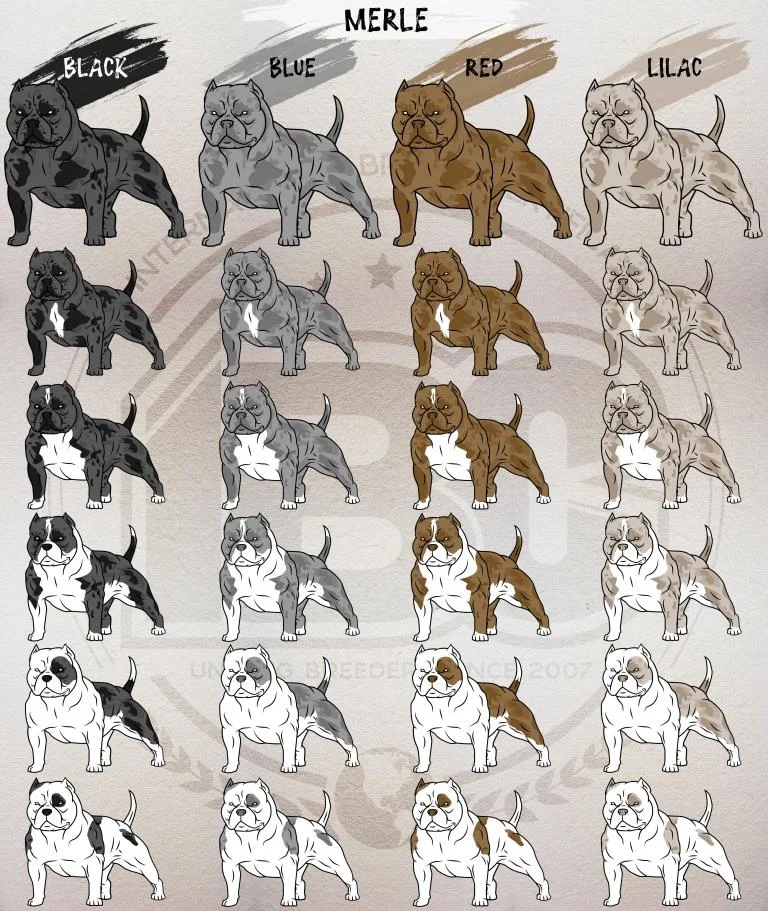
Merle randomly dilutes the eumelanin in the coat to a lighter color, leaving some areas in the original color and creating a marbled effect.
The patches can be any size and can be located anywhere on the dog. The edges of the patches may be irregular and “torn”, unlike the patches on a piebald dog.
Eumelanin: Merle affects eumelanin. This means that any black, chocolate, blue or isabella dog will be marbled; brindle stripes are also affected.
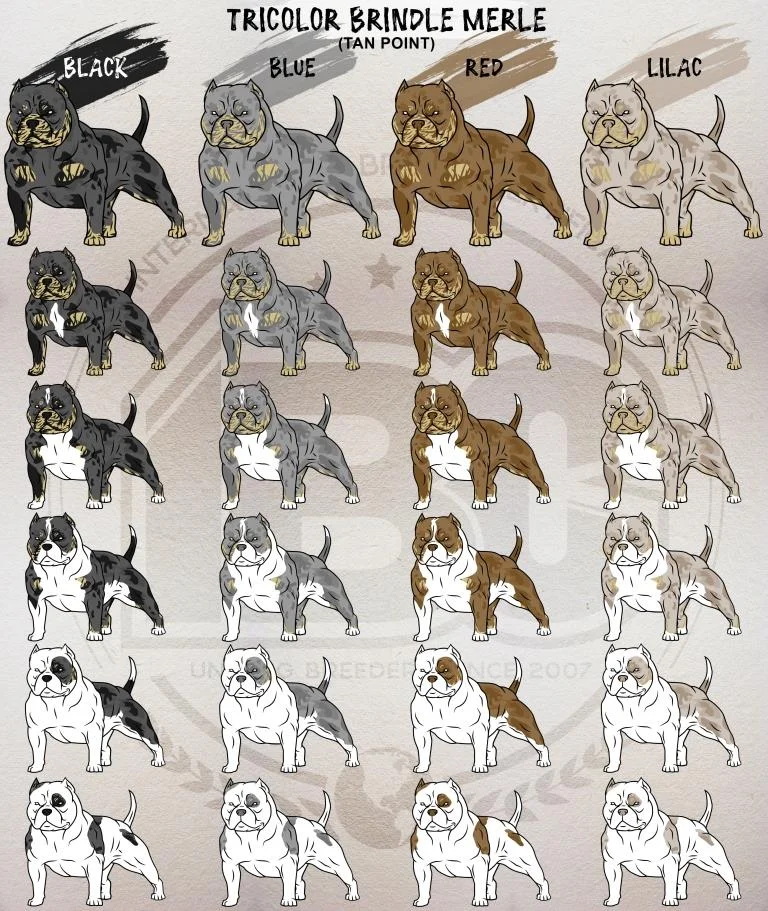
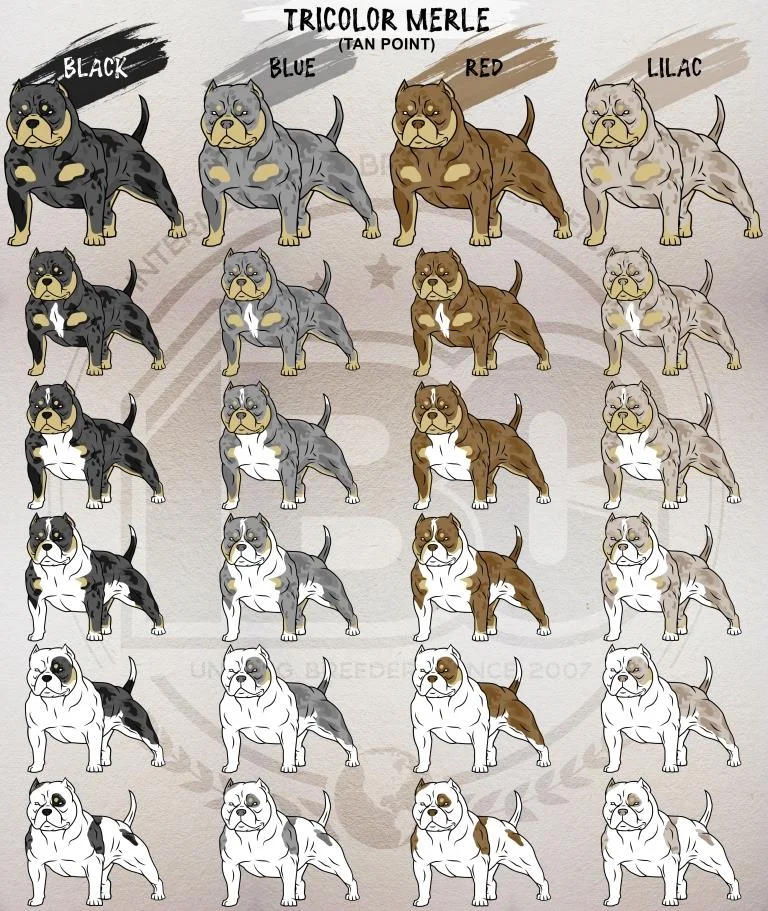
Pheomelanin: Found in golden dogs (from light cream to mahogany red), it is not usually affected, although there may be exceptions.
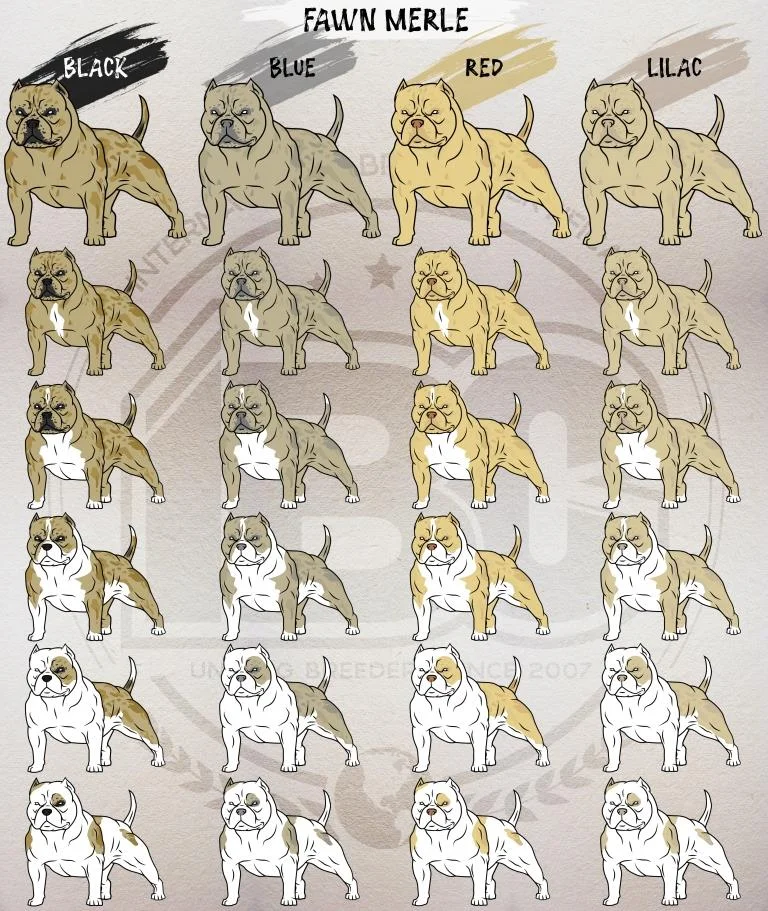
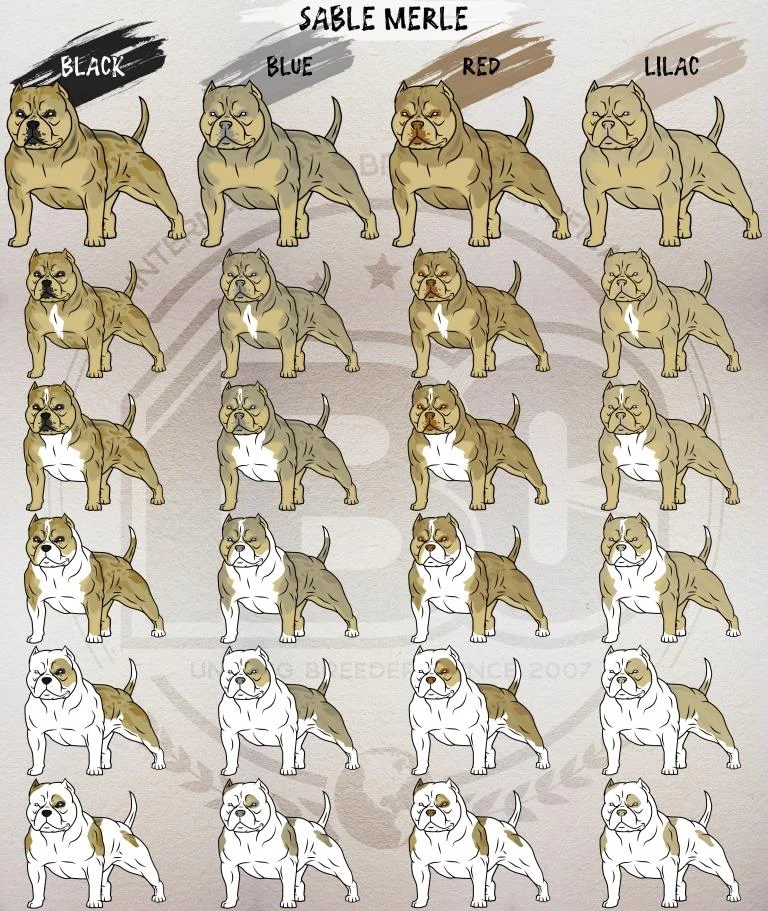
Other examples of Merle:
Merle and health problems
Merle is known to cause some health problems, mainly deafness and blindness, as well as sun sensitivity and higher rates of skin cancer.
These problems are uncommon in heterozygous merles (Mm) and more common in homozygous merles (MM). For this reason, as a general rule, two merle dogs should not be mated together, since this will probably produce some double merle puppies. There are some exceptions, but we will not go into them now, since understanding them requires more advanced knowledge.
The reason double merle dogs can be problematic is that this can cause a lack of pigment in certain vital areas, the eyes and inner ears. Most heterozygous merles have plenty of pigment because they still have an m (non-merle) allele to help them, but double merles often have large white areas with no pigmentation.
The information on this page provides a basic introduction to merle. New research has shown that the gene is actually more complex than this, so after reading the basic information, if you want a better understanding, you should read more about advanced merle genetics.
- Merle is dominant and is therefore written with a capital “M” (Mm or MM). Non-merle dogs are recessive and are written as “m” (mm).
Hidden Merle
Dogs with a pheomelanin coat (golden, from cream to mahogany red) are not usually affected by merle. These dogs are sometimes called “phantom” or “cryptic” merles.
White dogs may also not be identified as merle.
Golden dogs and white dogs mated with merle dogs can produce “hidden” merle dogs, simply because no one may know whether the golden and white dogs are merles, since merle usually cannot be seen with the naked eye. If the golden or white dog is a merle, there is a risk of accidentally breeding two merle dogs and producing double merles.
Merle and Harlequin
Harlequin occurs at its own locus, which means it is inherited separately from merle. However, a dog with the harlequin gene that is not merle will have a normal coat color. Harlequin can only show if a merle gene is present. Thus, most harlequins are HhMm (heterozygous for harlequin and merle).
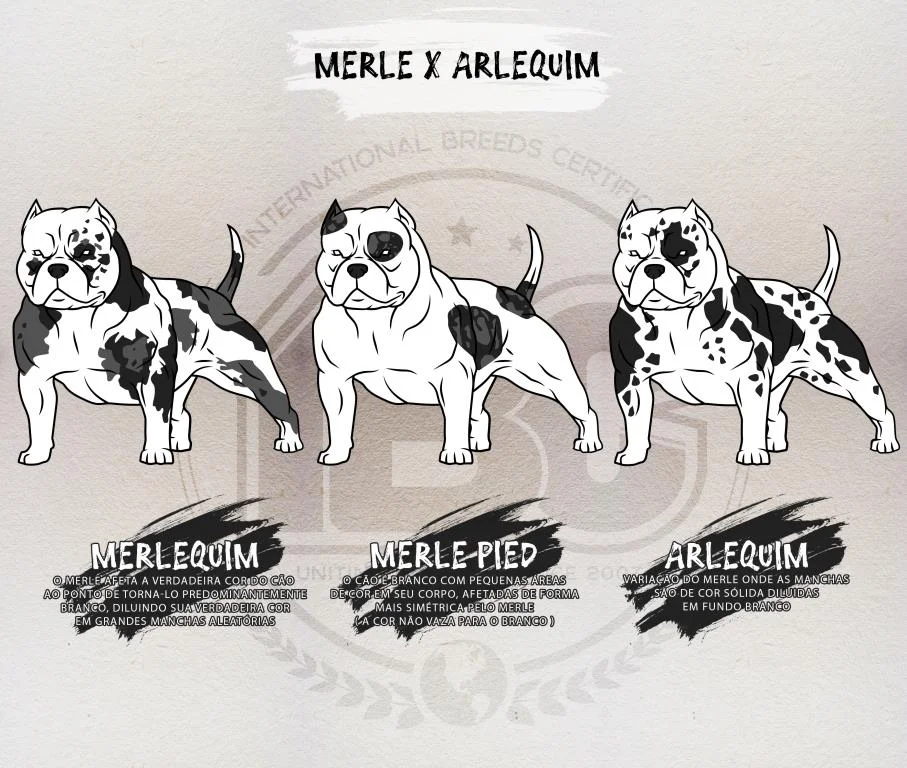
Harlequin is characterized by dark patches on a pure white background, sometimes with some ticking, while merle has patches in mixed light and dark shades.
Dogs that have both the harlequin gene and the merle gene will show the harlequin pattern. The only genes that would keep harlequin from being visible are those that make the dog completely or almost completely white. Any other color, whether brindle, sable, masked or any other, will become harlequin.
What is even more interesting about this gene is that it also affects pheomelanin (golden dogs), and not just eumelanin (black, liver, blue, lilac) as merle does. A fawn harlequin dog will become what is known as a “fawnequin”: sable patches on a white background.
Merlequin: Dogs that look like harlequins with merle patches (sometimes called “merlikins” or “merlequins”) are actually homozygous merles or piebalds without the harlequin gene. These dogs have “torn” patch edges with mixed colors (light and dark shades); the patches have no regular outline and make them look like harlequins, but they are not, since harlequins have strong, solid patches on a white background (not mixed colors). Therefore, the term “Merlequin” is a misnomer: these dogs have a distribution similar to the harlequin, but they are not harlequins.
All rights reserved to IBC; this information may not be copied or altered. Institutions wishing to use this material should contact the club.