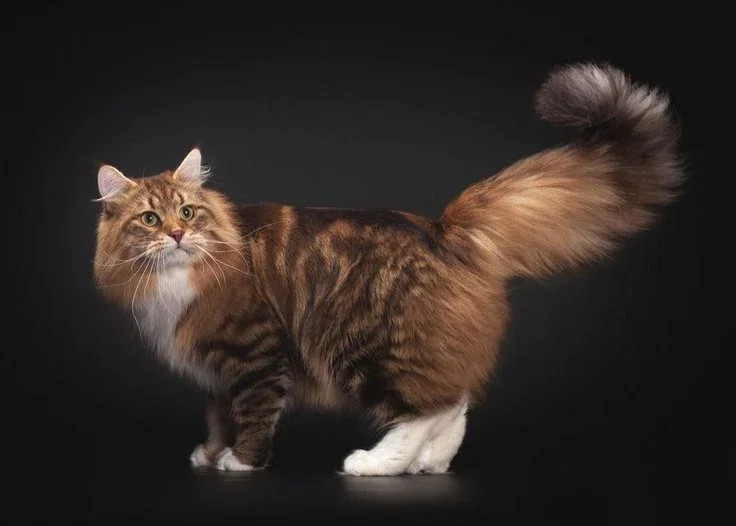
BREED STANDARD: SIBERIAN (SB)
POINT SCORE
HEAD: 40 points
- Shape ........................................ 12
- Ears .......................................... 5
- Eyes ............................................. 5
- Chin ........................................... 3
- Muzzle ......................................... 10
- Profile ............................................. 3
- Neck ......................................... 2
BODY: 35 points
- Torso .......................................... 10
- Legs ........................................... 5
- Feet ................................................ 3
- Tail ............................................ 5
- Boning ......................................... 6
- Musculature ................................... 6
COAT / COLOR: 15 points
- Length ................................ 5
- Texture .......................................... 5
- Pattern ............................................ 3
- Color ................................................. 2
OTHER: 10 points
- Balance ........................................ 5
- Condition ........................................ 3
- Temperament ............................... 2
CLASSIFICATION
CATEGORY: Traditional and Pointed
DIVISIONS: All
COLORS: All
ALLOWABLE OUTCROSSES: None
HEAD
Shape
Medium to large modified wedge with rounded contours, in good proportion to the body.
- Broadest at the top of the skull
- Tapering gently to a full, rounded muzzle
- Cheekbones neither high nor prominent
Ears
- Medium to large
- Rounded
- Slightly tilted forward
- Set as much on the sides as on the top of the head
- Ideal distance: between one and one and a half ear-widths
Coat:
- Short and fine on the back
- From the middle of the ear, the hair becomes longer and covers the base
- “Lynx” tips allowed
Eyes
- Large
- Almost round
- Outer corner slanting slightly toward the base of the ear
- More than one eye-width apart
There is no relationship between eye color and coat color/pattern.
Chin
Well rounded, not overly protruding, in line with the nose.
Muzzle
- Short
- Full
- Rounded
- Slight curve
- Smooth, subtle transition between head and muzzle
Profile
- Top of the head almost flat
- Gentle slope of the nose from the forehead to the tip
- Small convex curve before the tip of the nose
Neck
Rounded, sturdy and well muscled.
BODY
Torso
- Medium length
- Well muscled
- Back slightly higher than the shoulders
- Firm, barrel-shaped abdomen
- Feels solid and heavy (more so with age)
Legs
- Medium length
- Hind legs slightly longer
- Substantial boning
Feet
- Large
- Rounded
- Tufts between the toes desirable
Tail
- Medium length
- Broad at the base
- Tapering gently to a blunt tip
- Slightly shorter than the length of the body
Boning
Substantial.
COAT / COLOR / PATTERN
Length
Moderately long to long coat, with a triple layer:
- Denser, slightly shorter hair on the shoulders and lower chest
- Abundant ruff
- Close undercoat in adults, thicker in cold weather
- Summer coat allowed
There may be slight waviness on the belly and “britches”, but waviness is not a breed characteristic.
Texture
Varies from coarse to soft, depending on color.
Pattern
Well-defined patterns are desirable but secondary to type.
Color
All traditional and pointed colors accepted, with or without white.
- White allowed on the chin, chest and abdomen in tabbies
- White allowed in most areas
- Strong colors are desirable but secondary to type
OTHER
Balance
Well proportioned.
Condition
Excellent health and good general condition.
Temperament
Must be non-defiant.
GENERAL DESCRIPTION
The Siberian is a medium to large cat, with an overall appearance of:
- Excellent physical condition
- Strength
- Power
- Sweet facial expression
The overall impression is of:
- Rounded forms
- A structure of “circles”
It is a slow-maturing breed and may take up to 5 years to reach full development.
- Females are considerably smaller
- Allowances should be made for young cats and females
- Type is more important than size
ALLOWANCES
- Take slow maturation into account in kittens and young cats
- Buttons, spots and lockets allowed
PENALIZE
- Straight profile
- Narrow muzzle
- Tail too long
- Delicate boning
- Little musculature
- Excessively long body
- Almond-shaped eyes
- Legs too long
WITHHOLD AWARDS (WW)
- Illness
- Poor body condition
- Emaciation
- Visible tail defect
DISQUALIFICATION (DQ)
According to Article 16:
- Biting
- Fraud
- Cryptorchidism
- Polydactyly outside the standard
- Tail defects
- Strabismus
- Blindness
- Incompatible size
- Chest anomalies